This question presents a significant challenge for many property owners. It creates a situation where a serious issue is reported, yet the recommended solution is seemingly rejected. How does a landlord navigate this professionally and legally?
Data from the 2022-23 English Housing Survey highlights the scale of the problem. It reveals that 10% of privately rented homes in England reported problems with damp. This makes it a widespread concern for property managers.
Government guidance published in September 2023 is clear. It states that occupants should not be blamed for these conditions. The responsibility falls on landlords to identify and address the underlying causes.
This article provides a comprehensive, evidence-based process. It balances legal obligations with practical property management. We will explore assessment procedures, effective communication strategies, and robust documentation.
The goal is to protect both tenant health and landlord interests. This is achieved through a structured approach that demonstrates compliance and good practice.
Key Takeaways
- Damp and mould are particularly prevalent in the private rented sector.
- Latest government guidance places responsibility on landlords to address root causes.
- A structured process is essential for managing complex tenant interactions.
- Thorough documentation creates a vital evidence log for compliance.
- Effective communication can help overcome resistance to ventilation advice.
- Remedial actions must proceed regardless of occupant behaviour.
Understanding Damp and Mould Issues in Rental Properties
Effective management begins with a clear comprehension of moisture-related property issues. Fungal growth thrives in humid environments, typically appearing as dark spots on surfaces throughout the home.
Moisture serves as the primary catalyst for fungal development. This excess water can originate from two main sources: daily occupant activities or structural deficiencies within the building itself.
Property professionals should recognise three distinct moisture categories. Condensation occurs when warm, humid air contacts cold surfaces. Penetrating moisture enters through external defects, while rising moisture moves upward through walls.
The health implications of fungal presence cannot be overstated. Respiratory complications and aggravated asthma represent significant concerns. Vulnerable individuals face particular risks from prolonged exposure.
This understanding establishes fungal growth as a health hazard requiring professional intervention. Property maintenance addresses underlying causes regardless of contributing factors.
The Impact of Tenant Behaviour on Damp and Mould
The interplay between occupant routines and building performance forms a critical aspect of property maintenance. While landlords bear ultimate responsibility for resolving issues, understanding how resident actions influence conditions proves valuable.
Recognising Risky Practices
Certain habits can elevate moisture levels within properties. Drying laundry on radiators without adequate ventilation represents one common concern.
Keeping windows sealed during steam-producing activities like cooking or bathing also contributes. Blocking ventilation systems and maintaining low heating levels further exacerbate the situation.
Everyday activities naturally generate significant humidity. A single bath can release approximately two pints of moisture into the air.
How Behaviour Affects Property Conditions
Condensation occurs when warm, moist air contacts cold surfaces like windows and external walls. Water droplets form, creating ideal conditions for fungal growth if not addressed.
Higher occupant density increases moisture production through normal living activities. The Housing Ombudsman explicitly states that property issues cannot be dismissed as mere ‘lifestyle’ concerns.
Landlords must investigate and remediate regardless of contributing factors. Understanding resident behaviour helps develop effective prevention strategies while fulfilling legal obligations.
Awaab’s Law and the Regulatory Landscape
The regulatory framework for property hazards has undergone significant transformation following recent legislative developments. Awaab’s Law emerged from the tragic 2020 case where prolonged exposure to fungal growth contributed to a child’s death.
From 27 October 2025, social housing providers face strict deadlines. They must investigate potential hazards within 10 working days. A written summary follows within 3 days of completion.
Safety works require completion within 5 working days. Preventive measures must begin within the same timeframe. Complex cases allow up to 12 weeks for implementation.
Emergency situations demand immediate action. Suspected critical hazards require investigation within 24 hours. Properties must be made safe within the same period.
| Hazard Type | Investigation Deadline | Remediation Timeline | Documentation Required |
|---|---|---|---|
| Emergency | 24 hours | Immediate action | Safety certificate |
| Significant | 10 working days | 5 working days | Written summary |
| Preventive | Assessment complete | 5 days or 12 weeks | Action plan |
Private sector landlords currently follow different rules. The Homes Act 2018 governs their obligations. However, expansion plans indicate future alignment.
The government intends to extend these requirements through the Renters’ Rights Bill. This signals a universal standard across all housing sectors. Professional compliance becomes increasingly essential.
Legal Responsibilities for Landlords
Property ownership carries significant legal duties that landlords must understand and fulfil. The regulatory framework establishes clear obligations for maintaining safe living conditions.
Statutory Obligations and Compliance
The Homes (Fitness for Human Habitation) Act 2018 binds all English landlords. This legislation requires rental properties to be safe and habitable. Properties must be free from serious hazards.
Landlords maintain a duty to keep properties in good repair. This includes maintaining roofs, walls, and ventilation systems. These repairs help reduce moisture risks and protect occupant health.
Legal responsibility exists regardless of contributing factors. Property owners must address issues promptly to ensure compliance.
Regulatory Deadlines and Enforcement
Social housing providers face strict timelines under recent legislation. Failure to meet deadlines can result in court claims from residents.
Private landlords can face legal action if properties become unfit. The Housing Ombudsman Service adopts a zero-tolerance approach to property hazards.
Local authorities also enforce standards through the Housing Health and Safety Rating System. This can lead to improvement notices or prosecution.
Compliance is mandatory for all property owners. Failure to investigate and remediate issues promptly carries serious consequences. A systematic approach protects both residents and landlord interests.
Initial Assessment When Damp and Mould is Reported
Prompt and professional handling of initial reports establishes the foundation for successful resolution. The clock starts on “day zero” when the property manager becomes aware of the potential hazard. “Day one” represents the next working day, with all subsequent timeframes calculated accordingly.
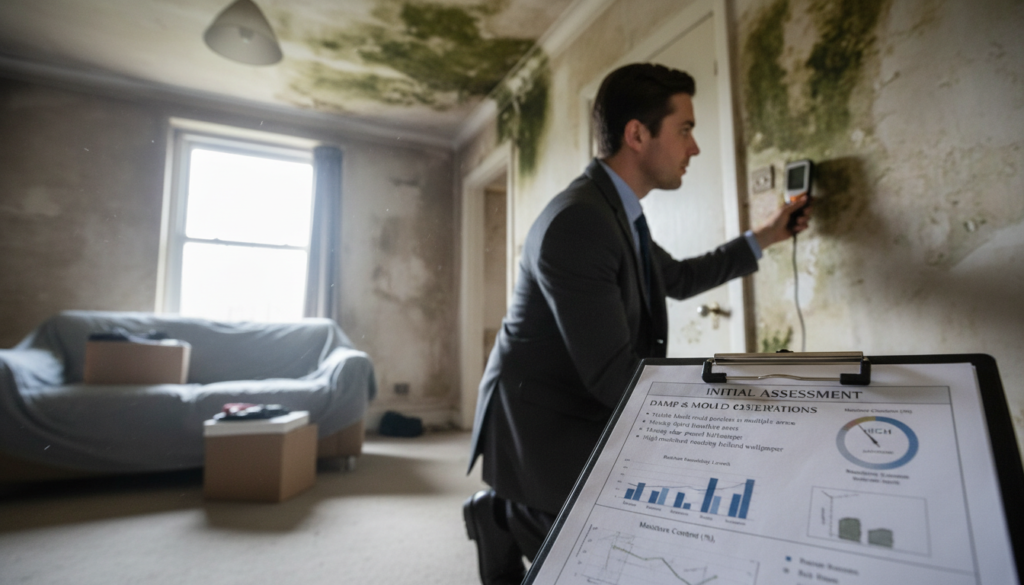
The assessment must be person-centred, considering household composition carefully. A situation tolerable for a healthy adult may pose serious risks for vulnerable occupants. This includes infants, asthmatic children, pregnant individuals, or people with respiratory conditions.
Property managers must classify the reported condition immediately. They determine whether it constitutes a potential emergency hazard or significant hazard. This classification dictates the required response timeline and investigation scope.
| Hazard Classification | Response Timeframe | Required Action |
|---|---|---|
| Potential Emergency | 24 hours | Immediate investigation |
| Potential Significant | 10 working days | Comprehensive assessment |
Gathering detailed information from the initial report proves essential. Property managers should document the location, extent, and duration of the issue. They should also record any health symptoms and previous mitigation attempts.
Action must proceed without delay regarding perceived contributing factors. The legal duty requires prompt assessment and investigation regardless of circumstances. Property managers should acknowledge reports in writing, explaining the assessment process clearly.
This thorough initial assessment sets the stage for appropriate response urgency. It determines investigation scope and required remedial measures. Most importantly, it creates the evidence base needed to demonstrate full compliance.
Identifying Emergency vs Significant Hazards
Proper hazard categorisation serves as the critical first step in managing property moisture concerns effectively. This classification directly determines response timelines and required intervention measures.
Emergency Hazard Criteria
Emergency situations demand immediate action within 24 hours. These include extensive fungal growth covering large wall areas or ceilings. Sleeping areas of vulnerable occupants with visible growth also constitute emergencies.
Active water ingress causing rapid development or occupants experiencing acute health symptoms require urgent intervention. Properties must be made safe within the same 24-hour period, with alternative accommodation provided if necessary.
Assessment of Significant Damp
Most reported cases fall into the significant hazard category. This triggers a 10-working-day investigation timeline. Visible growth affecting multiple rooms without extensive coverage typically indicates this classification.
Persistent condensation issues or damp patches suggesting building defects represent significant risk factors. The assessment must consider household composition, as identical conditions pose different health threats depending on occupant vulnerability.
| Hazard Type | Investigation Deadline | Primary Safety Actions | Documentation Timeline |
|---|---|---|---|
| Emergency | 24 hours | Immediate risk removal | Safety certificate within 24h |
| Significant | 10 working days | Comprehensive remediation | Written summary within 3 days |
This person-centred approach ensures appropriate resource allocation while maintaining regulatory compliance. Proper classification protects both occupant wellbeing and property owner interests.
Creating an Evidence Log for Tenant Behaviour
Systematic documentation provides the foundation for resolving complex property issues. A comprehensive audit trail begins when occupants first report concerns.
Property managers should record the initial contact method and date. This includes emails, phone calls, or portal messages. Immediate acknowledgement and planned actions complete the first entry.
The investigation phase requires thorough property condition records. Dated photographs show affected areas before treatment. Moisture readings and humidity measurements create objective data points.
| Documentation Element | Recording Method | Purpose |
|---|---|---|
| Initial Report | Date-stamped communication | Establish timeline starting point |
| Property Conditions | Photographs with measurements | Objective condition assessment |
| Occupant Support | Written guidance records | Demonstrate advice provision |
Recording occupant interactions requires professional discretion. Document ventilation guidance provided and heating patterns discussed. Observations during inspections should note window usage and ventilation status.
This audit trail serves multiple protective functions. It demonstrates compliance with legal obligations. The records also inform future actions if issues persist.
Structured documentation systems prove invaluable for property professionals. Spreadsheets or management software organise dates and attachments. Clear records facilitate compliance demonstration when required.
Steps to Remediate Damp and Mould Effectively
The remediation pathway moves from immediate safety measures to permanent preventive solutions in a logical progression. This systematic approach ensures both occupant protection and long-term resolution of property issues.
| Step | Primary Action | Key Objectives | Verification Method |
|---|---|---|---|
| 1 | Safety First | Remove visible growth, ensure ventilation | Photographic documentation |
| 2 | Diagnose Cause | Identify moisture source through survey | Moisture meter readings |
| 3 | Execute Repairs | Fix building defects to professional standard | Completion certification |
| 4 | Install Prevention | Upgrade ventilation and thermal performance | System functionality check |
| 5 | Redecorate | Apply protective coatings after drying | Moisture level confirmation |
| 6 | Verify Results | Conduct follow-up inspection and testing | Post-remediation assessment |
Initial remedial work focuses on making the property safe. Professional removal of fungal growth using appropriate treatments forms the first critical action.
Identifying the root cause precedes any permanent solution. Thorough surveys determine whether moisture originates from condensation, penetration, or rising sources.
Essential repairs address structural defects contributing to moisture problems. This work must meet Building Regulations standards for effectiveness.
The final verification step confirms improvement through measurable results. This comprehensive remedial work ensures compliance while protecting occupant health.
Improving Ventilation and Preventative Measures
Implementing effective ventilation systems represents the cornerstone of sustainable property maintenance. Most recurring fungal issues in occupied homes stem from condensation problems. Proper background and extract ventilation systems provide the primary preventive solution.
Modern continuous extract systems offer significant advantages in wet rooms. These low-energy fans operate constantly at background rates. They automatically boost when humidity levels rise, maintaining consistent moisture control.
Installation must comply with Building Regulations Approved Document Part F. This requires setting continuous flow rates based on room dimensions. Proper commissioning includes confirming boost triggers, overrun periods, and recording measured airflows.
Positive input ventilation (PIV) systems provide whole-home moisture dilution. Loft-mounted units introduce filtered, tempered air at gentle rates. This creates slight positive pressure that reduces relative humidity throughout the dwelling.
PIV works most effectively alongside compliant kitchen and bathroom extract systems. Air movement through the property via door undercuts enhances performance. Proper commissioning matches airflow settings to dwelling size and tested air permeability.
For problem rooms requiring passive solutions, dehumidifier vents offer simple maintenance-free options. Wall-mounted units containing moisture-absorbing crystals provide continuous relief. Positioning within 12 inches of ceilings targets warm, moist air accumulation zones.
All ventilation improvements require professional installation and commissioning. Documented settings and airflow rates demonstrate regulatory compliance. Clear maintenance instructions ensure long-term system effectiveness.
Implementing Remedial Work and Safety Upgrades
The execution phase represents the critical bridge between identifying problems and achieving lasting solutions. Property managers must balance legal deadlines with quality workmanship.
Coordinating Repairs and Upgrades
Landlords face strict timelines for completing safety work. Relevant safety measures must conclude within five working days. This includes professional removal and emergency fixes.
Further preventive work should begin within the same five-day period. When immediate commencement proves impractical, concrete steps must start within this timeframe. The physical work must then commence within twelve weeks.
| Work Category | Completion Deadline | Key Actions Required |
|---|---|---|
| Safety Work | 5 working days | Removal, emergency repairs, temporary solutions |
| Preventive Work | Begin within 5 days or start within 12 weeks | Permanent fixes, system upgrades, structural improvements |

When a property cannot be made safe within required timeframes, alternative accommodation becomes mandatory. The landlord bears all costs for suitable temporary housing.
Regular updates to residents throughout the process demonstrate professional management. Clear communication about schedules and any delays maintains trust.
Effective coordination ensures compliance while protecting both building integrity and occupant wellbeing. Proper planning makes challenging deadlines achievable.
Enhancing Communication with Tenants
Establishing productive dialogue forms the cornerstone of successful property management. When occupants raise concerns about property conditions, the initial response sets the tone for resolution. Property owners must approach these situations with sensitivity and professionalism.
Effective interaction begins with prompt acknowledgement of all reports. Thank occupants for bringing matters to attention and explain the serious health implications. Provide a clear timeline for inspection and remedial work without delay.
Written guidance should use accessible language to explain moisture management. Practical tips might include opening windows during steam-producing activities. Emphasise that these measures complement structural improvements rather than replace them.
| Communication Scenario | Recommended Approach | Key Documentation |
|---|---|---|
| Initial Report | Empathetic acknowledgement with action plan | Dated response with inspection schedule |
| Resistance to Guidance | Collaborative problem-solving focus | Record of advice provided and response |
| Follow-up Phase | Confirmation of resolution status | Post-remediation check record |
When occupants show reluctance towards recommendations, maintain a non-confrontational stance. Document all guidance provided and any responses received. Explain that ventilation improvements will reduce reliance on daily habits.
Building trust through clear communication encourages cooperative relationships. Occupants who feel supported are more likely to engage positively with preventive measures. They become proactive partners in maintaining property conditions.
Maintain comprehensive records of all interactions, including methods and dates. This creates a transparent audit trail demonstrating professional management. Regular follow-ups confirm issues remain resolved and build long-term confidence.
Using Professional Products and Systems
Professional-grade products and systematic application methods form the backbone of effective fungal remediation. Selecting appropriate treatments ensures both immediate hazard removal and long-term property protection.
Property managers must choose solutions matching the specific situation. Ready-to-use biocidal cleaners offer rapid response capabilities for emergency cases.
Product Selection and Application
Immediate hazard removal requires specific formulations. Concentrated versions provide economical solutions for larger affected areas.
Complete eradication kits combine essential treatments with application tools. These systems enable consistent methodology across multiple properties.
Worker safety remains paramount during treatment procedures. Proper protective equipment prevents exposure to harmful spores.
| Product Type | Primary Use Case | Key Features | Safety Requirements |
|---|---|---|---|
| Ready-to-Use Solution | Emergency response on walls and ceilings | Immediate application, no dilution needed | FFP3 respirator, gloves, eye protection |
| Concentrated Treatment | Large-scale projects requiring bulk treatment | Cost-effective, custom dilution ratios | Full coveralls, contained application |
| Sterilising Wash | Surface preparation before redecoration | Substrate cleansing, prevents recurrence | Adequate ventilation, protective clothing |
| Preventive Coating System | Long-term protection in high-risk areas | Fungicidal additives, mould-resistant properties | Standard decorating precautions |
Case Studies and Effective Solutions
Bathroom ceiling issues demonstrate successful remediation approaches. Professional treatment followed by ventilation upgrades creates lasting solutions.
Bedrooms with external wall problems benefit from combined strategies. Insulation improvements alongside protective coatings address underlying causes.
Whole-property condensation challenges require comprehensive systems. Positive input ventilation combined with guidance ensures sustainable results.
Appropriate finishing materials provide crucial long-term protection. Specialised paints and sealants resist future fungal development.
Monitoring and Documenting Progress
Systematic tracking of environmental conditions offers measurable proof that corrective actions are achieving desired results. This process creates an objective record demonstrating compliance and intervention effectiveness.
Baseline measurements should precede any remediation work. Record temperature and relative humidity in affected rooms at different times. Document moisture levels on walls and photograph affected areas comprehensively.
Digital thermo-hygrometers like ETI models provide quick, accurate spot readings. These tools track dry-down progress and verify ventilation improvements. Establish a consistent monitoring schedule throughout the remediation timeline.
Successful outcomes show relative humidity consistently below 60%. Surface temperatures should prevent condensation formation. Government guidance recommends follow-up inspections to confirm root cause resolution.
Maintain all data with dates, locations, and action notes. This creates a clear audit trail demonstrating proper investigation and effective remediation. The landlord fulfills obligations while protecting the property and its occupants.
Mitigating Health Risks Related to Damp and Mould
Addressing moisture-related concerns in rental properties transcends simple property maintenance, becoming fundamentally a matter of occupant wellbeing. Property managers must prioritise the serious health implications associated with these conditions.
Health Implications for Vulnerable Occupants
Fungal spores pose a significant risk to respiratory systems. Inhaling them can trigger coughing, wheezing, and severe asthma attacks.
Certain groups face heightened vulnerability. This includes children, older people, and individuals with pre-existing lung conditions. Their developing or compromised immune systems are less equipped to handle exposure.
Prolonged contact with these conditions can lead to more frequent infections. The cold, humid environment also favours dust mites, aggravating allergies.
Preventive Health Measures and Follow-up
Immediate safety advice is crucial upon identifying a problem. Landlords should recommend increased ventilation and minimising time in affected areas.
A sensitive inquiry about household composition helps assess urgency. Knowing if vulnerable individuals reside there allows for a tailored, swift response.
| Preventive Action | Primary Objective | Target Group |
|---|---|---|
| Temporary Relocation | Remove from exposure source | High-risk occupants in severe cases |
| Medical Advice Encouragement | Address worsening symptoms | All residents reporting issues |
| Post-Remediation Inspection | Confirm hazard elimination | Entire household for long-term safety |
This proactive approach aligns with the spirit of recent legislation. Protecting occupant health is the ultimate goal, making prompt action a legal and moral imperative.
Managing Damp and Mould, Tenant Behaviour, Evidence Log
A comprehensive strategy for managing property moisture concerns requires integrating legal compliance with systematic record-keeping. This approach protects both occupant health and property owner interests through clear responsibility frameworks.
Property owners maintain an absolute duty to address moisture problems regardless of origin. They must ensure properties remain free from structural defects that could cause these conditions. This includes addressing faulty plumbing, inadequate ventilation, or poor insulation promptly.
Occupants share responsibility through reasonable property use. They should maintain adequate heating and ventilation levels during normal living. Prompt reporting of emerging problems helps prevent minor issues from escalating.
Thorough documentation serves multiple protective functions. Clear records demonstrate compliance with statutory timelines and investigation requirements. They provide crucial proof that appropriate advice was given and necessary action taken.
In deposit disputes, adjudicators examine whether the property had adequate systems initially. They assess whether the owner responded appropriately to reports within reasonable timescales. Documentation showing occupant refusal to follow basic guidance may support claims for damage beyond normal wear and tear.
Landlords must remember they cannot claim for remedying building defects or installing necessary ventilation systems. These costs remain their responsibility as part of property maintenance. However, damage directly caused by negligent occupant behaviour may be recoverable with proper proof.
This balanced approach ensures legal compliance while creating a defensible position through comprehensive records. Proper documentation supports insurance claims, authority inspections, and demonstrates professional management standards.
Conclusion
Successful property management in today’s climate hinges on adopting resident-centred practices ahead of legislative mandates. The regulatory landscape continues to evolve, with Awaab’s Law expanding to additional hazards in 2026 and nearly all HHSRS hazards by 2027.
Landlords should treat moisture issues as health hazards requiring urgent investigation. Focus on making the property safe through building improvements rather than behavioural change. Document all actions comprehensively and follow Awaab’s Law timelines as best practice.
This systematic approach protects occupant health while fulfilling legal obligations. It also provides a defensible position should disputes arise. Professional support remains available through qualified surveyors and specialist suppliers.
The focus must always remain on hazards, health and prevention. This resident-centred approach represents both legal compliance and sound business practice that maintains property values and positive relationships.
FAQ
What immediate action must a landlord take upon receiving a damp or mould complaint?
Landlords must conduct a prompt inspection to assess the severity and cause. They should document the findings and initiate necessary remedial work within legal timeframes to protect tenant health and ensure compliance with housing safety laws.
How can a landlord prove that tenant behaviour is contributing to a damp problem?
Maintaining a detailed evidence log is essential. This should include dated photographs, records of advice given regarding ventilation, and notes on tenant actions, such as refusing to use extractor fans. This audit trail can be vital for legal protection.
What is the difference between an emergency hazard and a significant hazard related to damp?
An emergency hazard poses an immediate and serious risk to safety, requiring action within 24 hours. A significant hazard is serious but does not require immediate emergency action, though it must be addressed within a specified period under the law.
What are the key components of an effective damp and mould remediation plan?
A robust plan involves identifying the moisture source, executing repairs to the building fabric, improving ventilation systems, and engaging tenants with clear advice. Ongoing monitoring and documentation are critical for long-term resolution.
How does Awaab’s Law change a landlord’s responsibilities?
Awaab’s Law mandates that landlords must investigate and fix reported health hazards, like damp and mould, within strict deadlines. It emphasises the need for a swift, documented response to protect tenants’ health, particularly in social housing.
What preventative measures can landlords implement to reduce condensation?
Effective measures include installing positive input ventilation systems, ensuring extractor fans are working in high-humidity areas, and providing tenants with clear guidance on reducing moisture through simple lifestyle changes, like covering pans while cooking.