
If you let a property with a Baxi boiler, an annual gas safety check isn’t optional — it’s the law, and it’s what keeps your tenants safe from gas leaks and carbon monoxide. This guide explains the gas safety certificate (CP12) as it applies to Baxi boilers: what the law requires, how renewal works, the Baxi fault codes landlords see most, and what you can safely check yourself versus what needs a Gas Safe registered engineer.
Last reviewed: 7 August 2026.
Safety note: only a Gas Safe registered engineer may work on the gas side of a boiler or issue a certificate — it is illegal for anyone else. The checks below are limited to safe, non-gas actions.
Key takeaways
- A gas safety certificate (CP12 / Landlord Gas Safety Record) is valid for 12 months and must be renewed annually by a Gas Safe registered engineer.
- Give tenants a copy within 28 days of the check, and to new tenants before they move in; keep records for at least two years.
- Breaches can mean a fine of up to £20,000 and/or imprisonment — an unlimited fine at the Crown Court.
- A CO alarm is required in any room with a fixed combustion appliance, including a gas boiler.
- Common Baxi fault codes (E110, E118/E133, E128) usually point to pressure, a frozen condensate pipe, or ignition — some are safe DIY checks, others need an engineer.
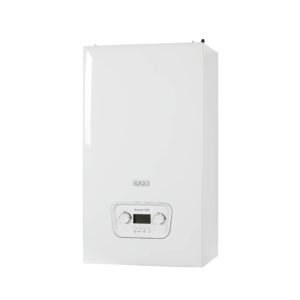
What the gas safety certificate is
A gas safety certificate — the CP12, formally the Landlord Gas Safety Record — confirms that a Gas Safe registered engineer has checked the gas appliances, flues and pipework you provide and found them safe. It’s required under the Gas Safety (Installation and Use) Regulations 1998 for anyone letting on a tenancy of under seven years. For a Baxi boiler, the engineer checks gas tightness, burner pressure and combustion, the flue and ventilation, and the boiler’s safety devices.
Your legal duties as a landlord
- Arrange an annual gas safety check on every gas appliance and flue you provide.
- Use a Gas Safe registered engineer — check their ID card and the Gas Safe Register.
- Give tenants the record within 28 days of the check, and to new tenants before they move in.
- Keep each record for at least two years.
- You can renew up to two months early without losing your existing anniversary date.
Since the Renters’ Rights Act 2025 abolished Section 21 on 1 May 2026, an expired certificate no longer blocks a Section 21 notice (there isn’t one) — but gas safety is a strict duty in its own right, and unresolved hazards can undermine a possession case brought on Section 8 grounds. Non-compliance is enforced by the Health and Safety Executive and can bring a fine of up to £20,000 and/or imprisonment, unlimited at the Crown Court.
The annual gas-safety routine
Keeping your Baxi boiler gas-safe
Book a Gas Safe engineer (service + check together)
Complete the annual check & issue the CP12
Give tenants a copy within 28 days
Keep records 2 years; diary the renewal
Common Baxi fault codes landlords see
Baxi boilers show a fault code on the display when something is wrong. Some point to issues a landlord or tenant can safely resolve; others are strictly engineer territory.
| Code (typical) | Usually means | Safe to check yourself? |
|---|---|---|
| E110 / low pressure | Water pressure below ~1 bar | Yes — top up via the filling loop |
| E118 / E133 | Frozen condensate pipe or ignition/gas fault | Thaw an external condensate pipe with warm water; ignition/gas needs an engineer |
| E128 / E160 | Circulation, fan or flow fault | No — call a Gas Safe engineer |
Fault codes vary by model, so always check the specific Baxi manual. Our guide to common Baxi boiler faults and to combi boiler problems cover the safe checks in more detail. Never repeatedly reset a boiler that keeps locking out on a gas fault.
For releasing trapped air from radiators cold at the top.
Protects the system against the sludge that causes faults and kettling.
Servicing keeps the certificate straightforward
A gas safety check is a safety inspection, not a service — but booking the two together is sensible. An annual service keeps the boiler efficient, catches wear before it becomes a breakdown, and protects the manufacturer’s warranty (Baxi warranties commonly run from a few years up to ten, conditional on annual servicing). Keeping system pressure in range and dosing the system with inhibitor heads off many of the faults that cause a mid-winter no-heat call-out.
Thinking of replacing the boiler?
Once a boiler is beyond about ten to twelve years old and needing frequent repairs, replacement often makes more sense than another fix. If you are replacing, it is worth asking your engineer whether a low-carbon option suits the property: the government’s Boiler Upgrade Scheme pays a £7,500 grant towards an air source heat pump (or a ground source heat pump) in England and Wales, applied by an MCS-certified installer. Note the older Renewable Heat Incentive is closed to new applicants, and the proposed Clean Heat Grant never launched — the Boiler Upgrade Scheme replaced them, so ignore any guide that still lists those.
FAQ
How often does a Baxi boiler need a gas safety certificate?
Every 12 months, carried out by a Gas Safe registered engineer, on all gas appliances and flues you provide. Give tenants a copy within 28 days and keep records for at least two years.
Can I do any Baxi boiler checks myself?
You can safely top up pressure via the filling loop, bleed radiators, thaw an external condensate pipe and reset the boiler once. Anything on the gas side must be done by a Gas Safe registered engineer.
What are the penalties for no valid certificate?
Letting without a valid gas safety check is a criminal offence — a fine of up to £20,000 and/or imprisonment, unlimited at the Crown Court, and it can invalidate your insurance.
How much is the heat pump grant if I replace the boiler?
The Boiler Upgrade Scheme pays £7,500 towards an air source or ground source heat pump in England and Wales, deducted upfront by an MCS-certified installer. The old £5,000 figure is out of date.
Written by the Landlords Portal team — experienced UK landlords covering the private rented sector. This article is general information, not legal advice. Always use a Gas Safe registered engineer and check current guidance at HSE.