
Flooring is one of the highest-impact decisions a landlord makes. Get it right and you cut reactive repairs, speed up re-lets, present better at viewings and avoid deposit rows at check-out. Get it wrong and you’re replacing swollen boards or stained carpet every couple of tenancies. This guide compares the three surfaces landlords actually choose — luxury vinyl tile (LVT), laminate and carpet — on durability, cleaning, tenant damage and whole-life cost, with a practical room-by-room plan for England.
Key Takeaways
- LVT is the all-rounder for rentals: waterproof, scratch-resistant and quick to spot-repair — ideal for kitchens, halls and high-traffic paths.
- Laminate gives a convincing wood look for less in dry living rooms and bedrooms — but keep it away from persistently wet areas.
- Carpet still wins for bedroom warmth and reducing impact noise in flats, but wears and stains faster.
- Standardise your specs and keep spare planks or tiles so you can swap a damaged section instead of re-flooring a whole room.
- A clear, photographed inventory is what lets you separate fair wear and tear from chargeable damage at check-out.
Why flooring matters for landlords
Flooring is a high-wear, high-visibility surface that a tenant sees and uses every day, and it’s among the items most commonly damaged in a tenancy. Durable, easy-clean finishes cut routine call-outs, stretch replacement cycles and help a property show well — which supports marketability and shorter void periods. Because you’re buying for turnover rather than for yourself, the right question isn’t “what looks nicest?” but “what survives ten years of tenants at the lowest whole-life cost?”
What to prioritise when buying flooring for a rental
Judge products on measurable performance, not showroom looks. Five things matter:
| Priority | What to check | Why it matters |
|---|---|---|
| Wear protection | LVT wear-layer thickness; laminate AC rating; UV/scratch-guard coat | Longer life, fewer visible scratches |
| Cleaning | Sealed surface, stain-resistant finish, pH-neutral compatible | Faster turnarounds, fewer deep cleans |
| Repairability | Click systems, modular planks/tiles, stocked spares | Fix one section, not the whole room |
| Moisture | Sealed edges, waterproof core, slip-resistant texture | Safe, mould-free wet zones |
| Acoustics | Quality underlay or acoustic boards | Less impact noise in flats |
Luxury Vinyl Tile (LVT): the landlord all-rounder
LVT pairs a tough surface finish with a waterproof core, which is exactly what a busy let needs. It shrugs off chair scrapes and pet claws, keeps a premium wood or stone look, and takes damp-mopping without swelling. For wear, choose a wear layer of 0.55 mm or more in halls and high-traffic corridors, and a rigid (SPC) core for stability over uneven subfloors.
Typical cost: roughly £12–£20 per m² installed, with a service life around 10–20 years depending on grade and traffic (prices vary by spec and region). Maintenance is simply a microfibre mop and a pH-neutral cleaner — no waxing or sealing. Choose click LVT and keep spare planks so a damaged board can be swapped in minutes.
Laminate: smart value for dry rooms
Laminate bonds a photographic wood-look layer to a dense fibreboard core, giving a realistic finish for less. For rentals, specify AC4 or higher for abrasion resistance and a 10–12 mm board for stability and a more solid feel underfoot. Click-lock systems mean you can swap a single scratched or chipped plank rather than relay the floor.
Typical cost: around £8–£15 per m² installed, lasting roughly 7–15 years. The catch is water: standing spills can still swell the edges even on “water-resistant” boards, so keep laminate to living rooms, bedrooms and studies and use LVT or tile in kitchens and bathrooms. Maintain expansion gaps at fitting to prevent peaking and squeaks.
Carpet: where it still makes sense
Carpet still earns its place in bedrooms and upper-floor rooms, where warmth and impact-noise reduction matter — particularly in flats with neighbours below. Pair a stain-resistant, commercial-grade carpet with a good underlay to improve feel and lifespan, and choose darker mid-tone neutrals that hide everyday marks.
The downside is maintenance: carpet traps odours and allergens, needs regular vacuuming and periodic deep cleaning, and shows wear sooner. Record the fibre type and condition with dated photos at check-in, accept genuine fair wear and tear, and consider carpet tiles in busier rooms so you can replace a single stained tile.
LVT vs laminate vs carpet: the head-to-head
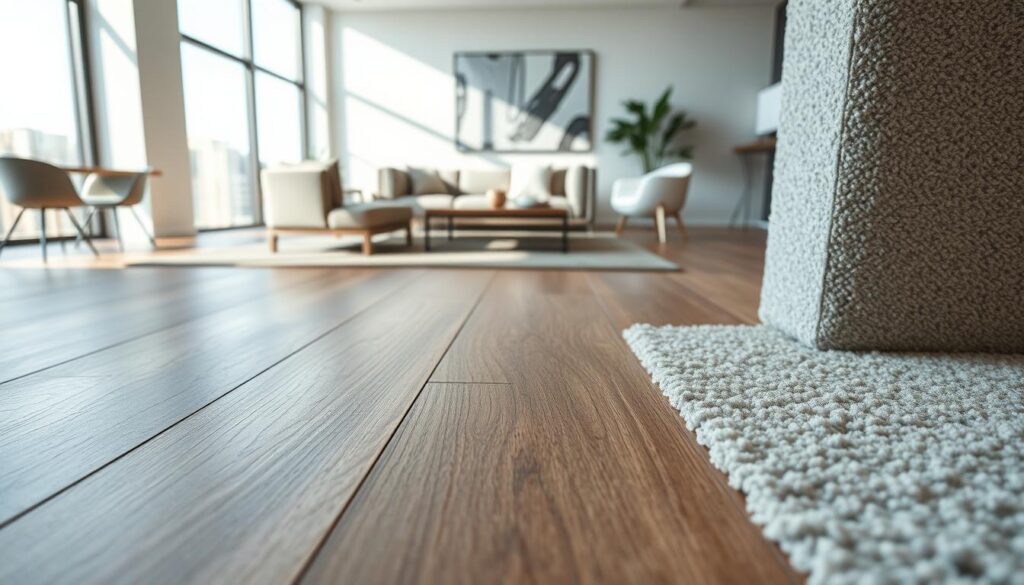
| Attribute | LVT | Laminate | Carpet |
|---|---|---|---|
| Scratch resistance | Very good (thick wear layer) | Good (AC4+) | Poor (shows wear) |
| Moisture tolerance | High (waterproof core) | Moderate (fast cleanup needed) | Low (not for wet zones) |
| Ease of cleaning | Very easy (mop) | Easy (damp mop) | Harder (vacuum + deep clean) |
| Repairability | Swap a plank | Swap a plank | Patch or replace area |
| Install price | £12–£20 / m² | £8–£15 / m² | Varies (lower upfront) |
| Typical life | 10–20 years | 7–15 years | 5–12 years |
The pragmatic answer for most portfolios is a blend: LVT or tile in kitchens, bathrooms, halls and entrances; laminate in lounges and bedrooms where budget matters; and carpet in bedrooms or upper floors where comfort and acoustics win.
Cheap kit that protects your floors (and your deposit)
Whatever you fit, a few inexpensive accessories dramatically slow wear, make turnarounds faster and help you avoid arguments over damage. Fitting these as standard is some of the best value a landlord can buy.
Safe for LVT and laminate finishes, so you are not stripping the surface at every clean.
Fast damp-mopping for hard floors between tenancies without over-wetting the boards.
Trap grit at the door — the single biggest cause of scratches in hallways.
Stop chairs, sofas and beds gouging hard floors; pennies to fit at check-in.
Colour-match wax to fill chips and scratches so you avoid replacing a whole board.
Room-by-room flooring plan
| Room | Recommended surface | Why |
|---|---|---|
| Kitchen | Waterproof LVT or glazed porcelain tile | Hygienic, wipes clean, resists spills |
| Bathroom | Textured, fully waterproof tile or LVT | Slip resistance and moisture defence |
| Living / hallway | Scratch-guard LVT or AC4+ laminate | Handles heavy traffic; easy plank swaps |
| Bedroom / upper floor | Carpet with good underlay | Warmth, comfort, impact-noise reduction |
| Stairs / landing | Stair-rated carpet or textured LVT with nosings | Grip, safety and long service life |
Add entry mats to trap grit, stair nosings for grip, and skirting or plinths to protect vulnerable edges around sinks and appliances. Keep boxed spares labelled by room and batch so colours still match years later.
Flooring for pet-friendly lets
With the Renters’ Rights Act making it harder to refuse a reasonable pet request, pet-ready flooring is increasingly worth speccing. Rigid-core LVT with a thick wear layer, high-pressure or AC4+ laminate in living zones, and glazed porcelain at muddy entrances all resist claws and accidents far better than carpet. Back it up with washable runners, felt pads and a spill kit, and set out expectations (including nail trims) in the tenancy.
Fair wear and tear vs damage: protecting your deposit
Flooring is one of the most common deposit battlegrounds, and the deposit schemes apply “fair wear and tear” plus betterment (you can’t charge a tenant to replace a worn ten-year-old carpet with a brand-new one). The way you win these is evidence, not argument:
- Record the floor’s age, type and condition with dated, timed photos in a signed inventory at check-in.
- Distinguish gradual wear (light traffic marks, flattened carpet pile) from damage (burns, deep gouges, pet staining) — only the latter is chargeable, and usually on a pro-rata basis for the item’s remaining life.
- Keep invoices and product datasheets so any deduction is proportionate and evidenced through your deposit protection scheme.
This is exactly why modular, repairable floors pay off: swapping a single damaged plank is cheap, clearly attributable, and rarely disputed.
Flooring and your repair obligations
Flooring feeds into a landlord’s habitability duties. Floors must be safe and level enough not to cause trips, and the property must be free of serious hazards under the Housing Health and Safety Rating System. Two 2026 changes raise the bar:
- The Decent Homes Standard is being extended to the private rented sector under the Renters’ Rights Act 2025, with a dedicated damp-and-mould criterion — so flooring that causes or hides persistent damp becomes a compliance issue.
- Awaab’s Law is being extended to private rentals, setting fixed timescales to investigate and fix damp, mould and other hazards once reported.
Waterproof surfaces with sealed thresholds in wet zones, level transitions and intact coverings all help you stay on the right side of these rules. Keep damp and mould in check, log inspections, and act quickly on reported problems.
Cutting voids with fast fits and quick repairs
Click-lock LVT and laminate install without adhesive and can be walked on immediately, which keeps a property market-ready with minimal downtime. Choose underlay for the location — acoustic upstairs, moisture-barrier on ground-floor concrete — and store labelled spare planks from each batch. When a board is damaged, remove the trims, release the affected planks, click in spares and refit the transitions. Fold this into your between-tenancies turnaround and your maintenance checklist.
Conclusion
There’s no single best rental floor — there’s the right surface for each room. Fit waterproof LVT or tile where water and grit collect, laminate where budget matters and rooms stay dry, and carpet where warmth and quiet count. Then protect what you’ve fitted with mats, felt pads and a sensible cleaning routine, keep spares for fast repairs, and document everything at check-in. Do that and your flooring will out-last more tenancies, cost less over its life, and keep you out of deposit disputes.
Written by the Landlords Portal team, based on UK product standards and housing rules current as of July 2026. This is general guidance for landlords, not legal advice; confirm deposit and habitability obligations for your circumstances and follow manufacturers’ fitting and cleaning instructions.
Frequently Asked Questions
What is the best flooring for a rental property?
For most rentals, waterproof LVT is the best all-rounder: it resists scratches and moisture, cleans easily and can be spot-repaired plank by plank. Laminate is better value in dry living rooms and bedrooms, and carpet remains a good choice for bedroom warmth and reducing noise in flats. A blend across the property usually beats a single surface everywhere.
Is LVT or laminate better for a buy-to-let?
LVT is more durable and fully waterproof, so it wins in kitchens, bathrooms, halls and high-traffic areas, and tends to last longer. Laminate costs less upfront and looks good in dry rooms, but standing water can swell the edges. Over the whole life of the floor, LVT often works out cheaper despite the higher purchase price.
Can I charge a tenant for damaged flooring?
You can charge for genuine damage such as burns, deep gouges or pet staining, but not for fair wear and tear, and only on a pro-rata basis for the item’s remaining life (you can’t bill for a brand-new floor to replace an old one). A dated, photographed inventory and receipts are essential to support any deduction through the deposit scheme.
What flooring is best for pets in a rental?
Rigid-core LVT with a thick wear layer, high-pressure or AC4+ laminate, and glazed porcelain tile at entrances all resist claws and accidents far better than carpet. Add washable runners, felt pads and a spill kit, and set pet expectations (including nail trimming) in the tenancy agreement.
How long does rental flooring last?
As a rough guide, LVT lasts around 10–20 years, laminate 7–15 years and carpet 5–12 years, depending on grade and traffic. Higher wear-layer thickness (LVT), higher AC rating (laminate) and better underlay (carpet) all extend life in a busy let.
What flooring should I avoid in a rental?
Avoid laminate in bathrooms and other persistently wet rooms, carpet in kitchens and entrances, and any uncertified or very thin budget product that will scratch and date quickly. Solid hardwood is usually too expensive and high-maintenance for a standard let.
Does flooring affect my repair obligations under the new rules?
Yes. Floors must be safe and free of trip hazards, and with the Decent Homes Standard extending to the private rented sector and Awaab’s Law setting repair timescales for damp and mould, flooring that causes or conceals damp can become a compliance problem. Waterproof surfaces, sealed thresholds and prompt repairs keep you compliant.