
Which surface will cut voids, halve reactive repairs and raise rent — LVT, laminate or carpet?
Landlords need clear, actionable advice when choosing surfaces for rental properties. UK owners spend about £4.7bn a year on upkeep, with roughly £322 per landlord on replacements. Two-thirds report carpets as the most harmed item.
This buyer’s guide looks at Luxury Vinyl Tile (LVT), laminate flooring and carpet through a landlord lens. It compares durability, ease of cleaning, tenant risk and whole-life value. Readers will learn which surface suits wet zones, living rooms and bedrooms.
The focus is practical: reduce re-lets, speed repairs and protect deposits. Standardising robust specs and keeping spares can cut downtime and increase achievable rent by up to 2.5%.
Throughout the guide, the aim is to give UK-compliant, room-by-room recommendations and rapid-install tips that landlords can apply immediately.
Key Takeaways
- Choose waterproof LVT for wet zones and quick re-lets.
- Laminate flooring offers good value for dry living areas.
- Carpet remains best for bedroom comfort but needs protection.
- Standardise specs and keep spare planks or tiles for fast repairs.
- Smart surface choices reduce reactive repairs and boost rent potential.
Why flooring matters in UK rentals right now
Choosing the right surface can sharply cut reactive repairs and shorten void periods across a landlord’s portfolio. Durable, easy-care finishes reduce routine call-outs and extend replacement cycles, protecting cash flow.
Maintenance spend and void reduction: the landlord’s business case
Providing tough, low-maintenance finishes at let lowers maintenance and shortens time between tenancies. Properties that present well during viewings turn over faster and can achieve up to 2.5% higher rents.
Tenant appeal, rent uplift and faster lets
Neutral, modern surfaces that resist visible wear improve marketability and reduce discounting pressure. Repairable systems and standardised spares cut check-out disputes and speed repairs.
- Link specs to maintenance budgets: stronger surfaces mean fewer call-outs.
- High-traffic zones benefit from scratch-resistant, moisture-tolerant options.
- Simple weekly routines with pH-neutral products reduce labour versus deep cleans.
- Consistent schemes enable bulk purchasing and standard spare parts.
What to prioritise in a Buy-to-Let flooring Buyer’s Guide
Landlords should prioritise measurable performance: wear resistance, water tolerance and fast repairability top the list.
Durability basics hinge on three inputs: wear layer thickness for LVT, AC ratings for laminate and dense core builds that resist indentation and wear. UV-coated surfaces also reduce visible scuffs over the product life.
Cleaning and stain resistance matter for swift turnarounds. Select sealed surfaces that take pH-neutral cleaners and have stain-resistant finishes to reduce routine maintenance and call-outs.
Repairability and waterproofing
Modular planks and click systems allow targeted replacements, cutting repair time and expense between lets. For wet zones, choose products with sealed edges and rigid waterproof cores to prevent swelling and mould.
Noise and comfort
For flats, specify carpet with quality underlay or add acoustic under-boards to limit impact noise transmission. Neutral, mid-tone colourways mask everyday marks and help properties present better between professional cleans.
| Priority | What to check | Practical benefit |
|---|---|---|
| Wear protection | Wear layer thickness / AC rating / UV coat | Longer life, fewer visible scratches |
| Cleaning | Sealed surfaces / stain-resistant finish / pH-neutral compatibility | Faster turnarounds, fewer call-outs |
| Repairability | Click systems / modular planks / stocked spares | Room repairs without full refit |
| Moisture | Sealed edges / waterproof cores / textured slip-resistant finishes | Safe, mould-free wet zones |
| Acoustics | Quality underlay / acoustic boards | Reduced impact noise for flats |
Luxury Vinyl Tile (LVT): landlord-friendly durability with easy cleaning
Luxury vinyl pairs a tough surface finish with a waterproof core to suit busy properties. It resists scratches from chairs and pet claws while keeping a premium look.
Wear layer thickness and scratch-guard technology
Thicker wear layer and scratch-guard coatings preserve appearance under heavy turnover. Choose 0.55 mm or higher in high-traffic corridors to reduce visible scuffs.
Waterproof cores for kitchens, bathrooms and entrances
Waterproof cores stop liquid ingress and allow damp mopping without swelling. That lowers mould risk at thresholds and speeds turnaround time after spills.
Realistic wood and stone looks without sealing
LVT delivers convincing wood and stone visuals without the sealing cycles natural stone needs. It tolerates acidic spills far better than unsealed materials.
Typical costs, lifespan and value for high-traffic properties
Typical installation runs £12–£20 per m² with an expected life of 10–20 years. That spreads upfront spend over long service life, making strong long‑term value.
- Maintenance: pH-neutral cleaner and a microfibre mop; no waxing.
- Choose click LVT for fast swaps and keep spare planks for quick repairs.
- Prepare a level, dry subfloor to avoid edge peaking and ensure click integrity.
Laminate flooring: smart value and quick repairs on a budget
Laminate pairs a dense fibreboard core with a textured wear layer. It resists scuffs from heels and offers a realistic wood or concrete look at lower upfront price than many alternatives.
AC ratings, dense cores and surface protection
Specify AC4 or higher for busy properties to resist abrasion and daily wear. Thicker boards (10–12 mm) and embossed surfaces help mask marks and improve perceived quality.
Click-lock convenience and plank-by-plank replacement
Click-lock systems allow targeted plank swaps after localised issues. Keeping a labelled box of matching planks reduces downtime and labour at check-out.
Where laminate excels and where to avoid it
Laminate is strong value in living rooms and bedrooms where spills are occasional and quick to wipe. It supports easy clean routines with pH-neutral products.
Caution is needed in persistently wet zones. Standing water can swell edges even on water-resistant boards, so avoid long-term exposure.
- Typical installation: £8–£15 per m²; expected life 7–15 years.
- Examples: Rustic Oak 12 mm (AC4); Urban Concrete 8 mm (water-resistant board).
- Fit notes: Level subfloor, maintain expansion gaps and choose tight locking profiles to prevent peaking and squeaks.
| Feature | Recommendation | Benefit |
|---|---|---|
| AC rating | AC4+ for high-traffic rooms | Resists abrasion and visible wear |
| Board thickness | 10–12 mm preferred | Better stability under furniture loads |
| Repair approach | Click-lock, keep spares | Fast plank replacement, shorter voids |
| Wet areas | Avoid prolonged exposure | Prevents swelling and edge lift |
Carpet in rentals: comfort, sound control and where it still makes sense
In upper-floor rooms and bedrooms, soft coverings deliver warmth and reduce impact noise for neighbours. They improve comfort and can help a property present better at viewings.
Best rooms and the role of quality underlay
Recommend carpets primarily for bedrooms and upper-storey living areas where acoustics and comfort matter most.
Quality underlay improves feel and extends life by absorbing foot traffic. It is not a substitute for purpose-made acoustic boards where strict noise limits apply.
Managing odours, stains and fair wear and tear
Carpets trap odours and allergens; expect regular vacuuming and periodic deep shampooing. Pre-tenancy deodorising helps reset a space for new occupants.
Use darker neutrals to hide everyday wear tear and consider carpet tiles in busy zones for simple section replacement after spills or burns.
- Set clear cleaning expectations at check-in and record fibre type and condition with photos.
- Accept fair wear and tear and document baseline condition to avoid disputes.
- Weigh lower upfront spend against earlier replacement and deep-clean cycles in busy properties.
| Aspect | Recommendation | Benefit |
|---|---|---|
| Best rooms | Bedrooms, upper floors, quiet living areas | Comfort and reduced impact noise |
| Underlay | Medium–high quality underlay | Improved feel, longer visible life |
| Maintenance | Frequent vacuuming, scheduled deep clean | Controls odours and allergens |
| Replacement approach | Carpet tiles or targeted patching | Faster repairs, shorter voids |
Durability, cleaning, tenant damage and cost comparison: LVT vs laminate vs carpet
Comparing resistance to scuffs, spills and daily wear gives a straightforward picture of lifecycle value across three popular surfaces.
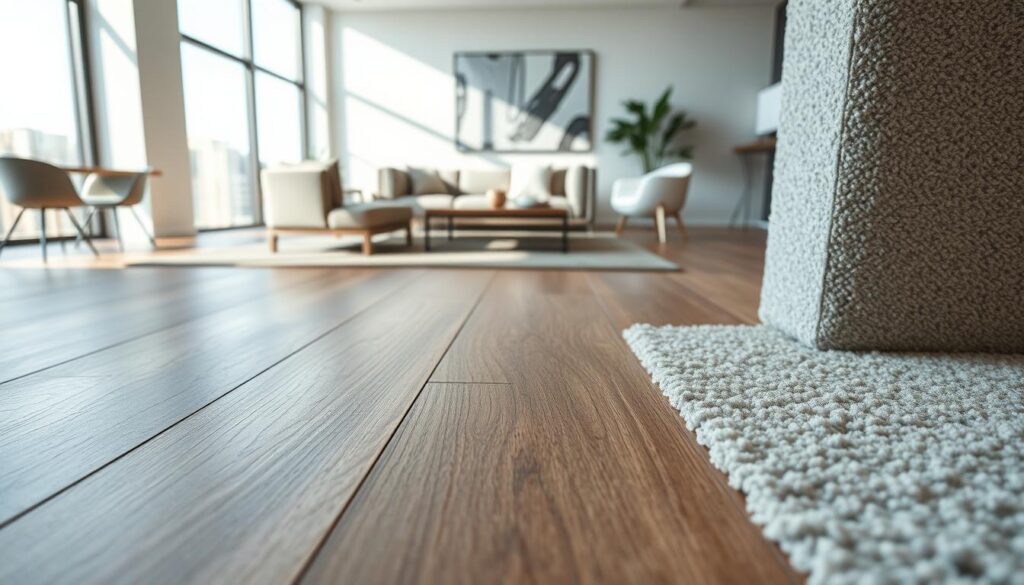
Scratch, dent and moisture resistance head-to-head
Luxury vinyl uses a thicker wear layer to resist scratches and tolerates routine mopping thanks to a waterproof core.
Laminate flooring relies on AC ratings; AC4+ stands up well to scuffs but needs fast spill cleanup to avoid edge swell.
Carpets show visible wear sooner and are unsuitable where moisture is frequent.
Daily routines and end-of-tenancy turnarounds
Hard surfaces need sweeping and damp mopping for fast turnaround. Carpets require frequent vacuuming and periodic deep cleans that extend re-let time.
Common tenant scenarios and deposit-proofing
- Pet claws and drag marks: modular planks permit local swaps.
- Stains and burns: carpets often need larger patching or full refit.
- Documentation: take timed photos and note acceptable wear thresholds to support deposit decisions.
Upfront price, lifespan and whole-life cost in UK properties
Laminate typically installs at £8–£15 per m² with 7–15 years life. LVT installs at £12–£20 per m² with 10–20 years life.
We recommend a strategic blend: LVT for wet and high-traffic paths, laminate for main living areas and carpet for bedrooms to balance comfort, service time and long-term value.
| Attribute | Laminate flooring | Luxury vinyl | Carpets |
|---|---|---|---|
| Scratch resistance | Good (AC4+) | Very good (thicker wear layer) | Poor (shows wear) |
| Moisture tolerance | Moderate (quick cleanup needed) | High (waterproof core) | Low (unsuitable for wet zones) |
| Install price | £8–£15 / m² | £12–£20 / m² | Varies (lower upfront, higher service) |
| Typical life | 7–15 years | 10–20 years | 5–12 years (depends on traffic) |
Room-by-room rental flooring choices that work
A room-by-room specification helps landlords match performance to use and risk. The right choice for each space limits repairs, speeds relets and preserves presentation.
Kitchens
For kitchens select waterproof LVT or glazed porcelain tiles. These resist spills and wipe down quickly.
Avoid carpet. Guard vulnerable edges by boxing in plinths around sinks and appliances.
Bathrooms
Prioritise slip‑resistant textures and fully waterproof bases. Ensure sealed transitions at thresholds to stop water ingress into adjacent rooms.
Living areas and hallways
Choose scratch‑guard LVT or AC4+ laminate in heavy traffic areas. Use stair nosings and entry mats to trap grit and reduce wear near doors.
Bedrooms and upper floors
Carpet with quality underlay remains best for warmth and acoustics. In flats it reduces impact noise for neighbours below.
Stairs and landings
Fit stair‑rated carpet or textured LVT with secure nosings for grip and longevity. Prioritise slip resistance and visible wear resistance on steps.
Hygiene and lifecycle: use finishes compatible with pH‑neutral cleaners and set weekly routines to limit build-up. Keep boxed spares by room and batch to enable fast swaps in high‑risk zones such as entrances and under dining tables.
| Room | Recommended surface | Key benefit |
|---|---|---|
| Kitchen | Waterproof LVT or glazed porcelain tiles | Hygienic, easy wipe-down, resists water |
| Bathroom | Textured, fully waterproof tile or LVT | Slip resistance and long-term moisture defence |
| Living / Hall | Scratch-guard LVT or AC4+ laminate | Handles heavy traffic; easy plank swaps |
| Bedroom / Upper floors | Carpet with good underlay | Warmth, comfort and impact noise reduction |
| Stairs / Landings | Stair-rated carpet or textured LVT with nosings | Safety, grip and extended service life |
Pets in rental properties: scratch-proof, stain-resistant solutions
Choosing pet-ready options reduces visible wear and eases handovers. A practical scheme pairs robust surfaces with simple protections and clear tenant expectations.
Best choices for active homes include reinforced luxury vinyl with thick wear layers, high-pressure laminate or AC4+ laminate flooring in living zones, and glazed porcelain tiles at entrances.
Practical protections
- Specify LVT with scratch-guard coatings to resist claws and keep noise low.
- Use HPL or AC4+ laminate for a balance of toughness and easy clean maintenance.
- Fit glazed porcelain tile at thresholds to handle muddy paws and heavy traffic.
- Install washable runners, felt pads on furniture feet and non-slip bowl mats to prevent pools and scuffs.
- Agree regular nail trims in the tenancy addendum and provide simple spill kits for tenants to reduce stains and potential claims.
| Option | Best use | Benefit |
|---|---|---|
| Luxury vinyl | Kitchens, halls | Waterproof, scratch-resistant |
| High‑pressure laminate | Living rooms | Hard-wearing, planks tiles easily swapped |
| Glazed porcelain | Entryways | Supreme scratch and stain resistance |
Compliance made easy: flooring that meets UK standards
Specification and record-keeping make compliance straightforward. Choose water‑resistant, slip‑friendly surfaces with sealed edges and clear replaceable panels. Then document product datasheets, invoices and cleaning guidance to show proactive care.

Decent Homes Standard: safety, damp and repair obligations
The Decent Homes Standard requires safe, level surfaces that do not cause trips and that prevent moisture entry. Secure thresholds and intact coverings help suppress mould and keep a property habitable.
Renters’ Reform Bill: fitness and prompt repair
The Renters’ Reform Bill strengthens obligations for timely repairs and fitness for habitation. Durable, repairable coverings let a landlord fix issues fast without full replacements, reducing legal risk and short downtime.
- Reduce hazards: secure edges, level transitions and intact surfaces cut trip risk.
- Control damp: waterproof materials and sealed wet thresholds limit mould growth.
- Prove compliance: keep inspection logs, product specs and cleaning instructions for each property.
- Monitor wear: inspect stairs, entries and high-traffic points regularly and act early.
Fast installation and rapid repairs to cut voids
Fast-fit systems and pragmatic repair routines keep properties market-ready with minimal downtime. Choosing quick installation products and simple repair methods directly reduces void time and preserves rental yield.
Click-lock systems, underlay choices and DIY readiness
Recommend click-lock systems for both LVT and high-quality laminate. They allow adhesive-free installation and plank replacement, saving contractor hours at re-let.
Select underlay to suit the location: acoustic underlay upstairs and moisture-barrier underlay on ground floors to extend service life and reduce future maintenance.
Keeping spare planks/tiles and quick-swap methods
Store labelled spare planks from each original batch for colour match. The quick-swap method is simple: remove trims, release the affected boards, click in spares and refit transitions.
Essential tools and cleaners for routine upkeep
Keep a basic toolkit: pull bars, spacers, a multi-tool, matching filler sticks and a carpet-type roller for seated joints. Use colour-matched repair kits for visible scuffs.
Implement an easy clean routine with a microfibre mop and pH-neutral cleaner to preserve finishes and cut service time.
- Train caretakers on manufacturer repair steps.
- Log repair times and parts used to refine product choices and supplier selection.
| Item | Purpose | Benefit |
|---|---|---|
| Pull bar & spacers | Install and remove planks | Faster plank swaps |
| Carpet-type roller | Seat joints on vinyl/laminate | Seamless finish |
| Microfibre mop + pH-neutral | Routine upkeep | Maintains look, reduces maintenance time |
flooring rental, durability, cleaning, tenant damage, cost comparison, BTL Floor
Practical supplier steps and sample checks cut waste and speed repairs across a landlord’s portfolio. Begin with a like-for-like checklist to make fair product choices.
How to shortlist and compare specs
Checklist: wear layer thickness or AC rating, waterproof core, click system type, slip resistance and warranty term. Use this to compare quoted products side-by-side.
Stories Flooring picks and sample strategy
Test real examples before bulk buys. Try Siesta Oak Wood Effect LVT (0.55 mm wear layer, waterproof core) and Market Street Herringbone LVT (click-lock, easy-clean finish).
Also review Rustic Oak 12 mm Laminate (AC4) and Urban Concrete 8 mm Laminate (water-resistant board). Order free samples to check texture, gloss and colour under each property’s lighting.
Price match, delivery and returns to protect cash flow
- Use supplier price-match to keep unit prices competitive.
- Align delivery with installers to avoid site storage and excess stock.
- Leverage hassle-free returns so surplus samples or over-orders don’t tie up capital.
- Keep a small central stock of chosen products for rapid swaps and reduced void time.
| Action | Why it matters | Practical step |
|---|---|---|
| Like-for-like checklist | Ensures apples-to-apples comparison | Record wear layer/AC, waterproof spec, lock type, warranty |
| Sample verification | Confirms look and feel in situ | Order free samples; test under property lighting |
| Supplier terms | Protects cash flow and timing | Negotiate price match, fast delivery, flexible returns |
| Stock & feedback | Speeds repairs and improves choices | Hold small spares; collect tenant feedback on comfort and noise |
Conclusion
For pragmatic landlords, matching product performance to room use reduces service calls and shortens voids.
Prioritise tough, easy‑wipe surfaces in high-traffic zones and waterproof panels at thresholds. Use mid-tone wood and stone looks to appeal to a wide market and simplify future matching.
We recommend a blended spec: LVT or glazed tiles for kitchens and entrances; laminate in lounges and studies; carpets with good underlay in bedrooms for warmth and sound control.
Check wear layer, AC rating, water resistance and underlay before buying. Keep spares, standardise installation systems and train teams for fast plank swaps to cut downtime.
Record baseline photos, set clear cleaning expectations and schedule sample checks room‑by‑room. Shortlist, order samples and time installation to market the property quickly.
FAQ
What are the pros and cons of LVT, laminate and carpet for buy-to-let properties?
Each option suits different priorities. Luxury vinyl tile (LVT) offers strong water resistance, easy cleaning and realistic wood or stone looks, making it ideal for kitchens, halls and high-traffic lets. Laminate gives good wear-per-pound with quick click‑lock installation and straightforward plank replacement, but it varies in moisture resistance. Carpet provides warmth and sound control for bedrooms and upper floors, yet it needs more frequent cleaning and may show heavy soiling in high-turnover tenancies. Landlords should weigh lifespan, maintenance effort and tenant appeal when choosing.
Why should landlords care about flooring quality now in the UK market?
Quality underfoot reduces void periods, lowers repair spend and supports higher achievable rents. Well‑specified coverings cut call‑outs for patch repairs, help meet regulatory fitness and damp standards, and make properties more attractive to prospective tenants. In a competitive lettings market, resilient surfaces can speed up lets and protect long‑term asset value.
How does improved flooring reduce maintenance spend and voids?
Durable coverings with robust surface protection and waterproof cores resist stains and everyday wear. That lessens emergency repairs and deep cleans between tenancies, shortening turnaround time. Easy‑to‑replace plank systems also allow spot repairs instead of full renewals, keeping income disruption and expenditure down.
Can better flooring increase rent or speed up lets?
Yes. Fixtures and finishes influence first impressions and perceived value. Clean, modern, low‑maintenance surfaces attract a broader tenant pool and can justify modest rent premiums. Photogenic, neutral palettes help listings perform better online and reduce time on the market.
What should landlords prioritise when buying coverings for rentals?
Focus on three clear areas: resistance (wear layers, core type, AC or equivalent ratings), maintainability (surface coatings, stain resistance, ease of cleaning) and repair strategy (modular planks/tiles and availability of spares). Also consider waterproofing for wet zones and acoustic underlay for flats to meet neighbourly expectations.
What do wear layers, cores and AC ratings actually mean?
Wear layers are the protective top coating that resists scratches and scuffs; thicker usually means longer life. Cores determine stability and water tolerance — for example, rigid core LVT or HDF laminate. AC ratings (or manufacturer equivalents) indicate abrasion resistance for laminate; higher numbers suit heavier commercial or multi‑occupancy use.
How important is cleaning and stain resistance for reducing call‑outs?
Vital. Surfaces with protective seals and wipe‑clean finishes resist spills and reduce deep‑clean frequency. Regular, simple routines—vacuuming, damp mopping with manufacturer‑approved cleaners—prevent build‑up that leads to stains or odours and keeps deposit disputes to a minimum.
What repair and replacement strategies work best between tenancies?
Choose products with click systems and individual planks or tiles that can be swapped quickly. Keep a small stock of matching planks or tiles and use rapid adhesives or floating installations for fast turnarounds. For carpets, use targeted patching where possible; otherwise plan scheduled area replacements in line with lifecycle forecasts.
Which surfaces are genuinely waterproof for kitchens and bathrooms?
Fully waterproof rigid core LVT and quality glazed porcelain tiles are reliable for wet areas. Some laminate products claim water resistance, but few are fully waterproof at junctions or under edge failures. Correct sealing at thresholds and skirtings, plus suitable subfloor prep, is essential.
How should landlords manage noise and comfort in flats?
Use acoustic underlay with impact sound reduction ratings suitable for multi‑occupancy properties. Soft floorings and quality underlays improve warmth and reduce airborne and impact noise. Always check building regulations and local management company requirements for minimum impact sound performance.
What makes LVT a landlord‑friendly option?
LVT combines robust wear layers, scratch‑guard technology and waterproof cores, which reduce stains and moisture failures. It replicates wood or stone without sealing upkeep and cleans quickly. Its longevity and tenancy‑proof finishes make it cost‑effective over the life of the asset.
How do lifespan and whole‑life price of LVT compare to other options?
LVT often carries a higher upfront figure than basic laminate or carpet but typically offers longer service life and lower maintenance spend. Whole‑life cost should factor in replacement cycles, cleaning, void days and deposit dispute risk to give a true comparison.
When is laminate the right choice for a budget‑minded landlord?
Laminate is suitable where appearance and quick installation matter and moisture exposure is limited. Choose high AC ratings, denser cores and robust surface protections for busy lets. Its plank‑by‑plank repairability keeps long‑term maintenance manageable if specified correctly.
Where should landlords avoid fitting laminate?
Avoid laminate in frequently wet rooms or poorly ventilated bathrooms unless the product is explicitly rated for moisture and installed with suitable seals. Also be cautious on ground floors over concrete without proper damp control measures.
When does carpet still make sense in a rental?
Carpet remains appropriate in bedrooms, some upper floors and situations where sound insulation and occupant comfort are priorities. Choose commercial‑grade ranges with stain‑resistant treatments and quality underlay to improve lifespan and tenant satisfaction.
How can landlords manage odours and stains in carpeted properties?
Use stain‑resistant fibres, professional periodic cleaning and clear tenant guidance on spill response. Maintain records of regular cleans and condition reports to support deposit deductions when genuine fair wear and tear thresholds are exceeded.
How do LVT, laminate and carpet perform against scratches, dents and moisture?
LVT typically wins on moisture and dent resistance, while high‑grade laminate resists surface abrasion well but can fail with prolonged water exposure. Carpet hides minor dents but shows stains and odours. Select products with demonstrated wear layers, dense cores and reputable warranties for risk mitigation.
What daily and end‑of‑tenancy cleaning routines reduce turnaround time?
Daily routines: regular vacuuming, swift spill removal and manufacturer‑approved cleaners. End‑of‑tenancy: targeted spot repairs, deep clean of soft coverings, and steam or bonnet cleaning where appropriate. Documented checklists speed contractor quotes and reduce disputes.
How should landlords handle common tenant damage scenarios to protect deposits?
Keep detailed inventory photos, dated condition reports and receipts for any professional works. Use clear clauses in tenancy agreements about permitted alterations and cleaning standards. For minor surface damage, spot repair or replacement of planks often avoids lengthy deposit claims.
What is the best room‑by‑room approach for surface selection?
Kitchens and halls: waterproof, wipe‑clean coverings such as LVT or porcelain. Bathrooms: non‑slip, fully waterproof tiles or certified LVT. Living areas and hallways: hardwearing planks or robust carpet in specific cases. Bedrooms and upper floors: carpet or acoustic underlaid planks for comfort. Stairs: anti‑slip finishes, runner options and tough materials suited to high footfall.
Which surfaces are most pet‑friendly?
Pet‑ready choices include rigid core LVT, high‑pressure laminate with strong surface coatings and glazed porcelain. These resist claws, accidents and frequent cleaning better than soft pile coverings. Combine with protective runners, easy‑wash mats and tenant guidance on nail upkeep.
What UK standards should landlords check when specifying coverings?
Ensure compliance with the Decent Homes Standard on safety, damp and repair obligations. Check product certifications for slip resistance, fire performance and acoustic ratings. Keep records to demonstrate fitness and timely maintenance under the Renters’ Reform Bill obligations.
How can fast installations and repair methods reduce void periods?
Use click‑lock systems, single‑layer underlays and floating installations to speed fits. Maintain a small stock of spares for quick plank or tile swaps and train contractors on rapid‑swap techniques. These measures cut downtime and preserve cash flow.
How should landlords shortlist products and compare specifications?
Compare wear layer thickness, core composition, abrasion or AC ratings, warranty terms and cleaning regimes. Request free samples and test them in situ under typical light and traffic. Evaluate delivery times, returns and price‑match policies to protect budgets and scheduling.
What practical tips help with purchasing and supplier selection?
Ask suppliers for references from other landlords, request clear warranty and installation terms, and insist on matching samples left with the property. Prioritise brands with transparent specs and accessible customer service to support swift claim resolution and continuity.