
Last updated:
An empty month costs you the full rent plus the bills: council tax, energy, insurance conditions and mortgage payments all carry on. Most voids are longer than they need to be because marketing starts too late, the price is wrong, or the property is not ready when the right tenant appears. This guide shows how to shorten the gap between tenancies, using the two-month notice window tenants must now give.
Key takeaways
- Start marketing the day the tenant gives notice. Two months is usually enough to find the next tenant.
- Price from the rents nearby properties actually let for. If you get few enquiries in two weeks, adjust.
- Since May 2026 you must advertise a fixed rent and cannot accept offers above it.
- You cannot refuse tenants just because they receive benefits or have children, and you cannot unreasonably refuse pets. A wider pool fills faster.
- Book cleaners, trades and the inventory clerk before the old tenant leaves.
What a void really costs
For a property let at £1,200 a month, one empty month typically costs £1,200 in lost rent plus council tax, which the owner usually pays while a property is empty, energy to keep it heated, and any mortgage payments. If it stays empty for a long time, councils can add an empty homes premium after one year; see our guide to council tax on empty homes. Many insurers also restrict cover after 30 to 60 days of unoccupancy.
A two-month plan to avoid a void
Week 0
Notice received. Ask why they are leaving, check comparables, agree viewing access
Week 1
Listing live with good photos, floor plan and a clear rent
Weeks 2–5
Viewings, then referencing. Review the price if enquiries are slow
Weeks 6–8
Check-out, clean, small repairs, check-in for the new tenant within days
1. Start marketing as soon as notice is given
Tenants in England must now give at least two months’ notice. Use it. Ask the outgoing tenant for access for viewings in writing, offer to group viewings into one or two slots a week, and thank them for their help; a co-operative tenant who keeps the property tidy is worth a small goodwill gesture. Our guide to tenant notice periods covers what happens when a tenant wants to leave.
2. Price it right from the start
Overpricing is the most common cause of long voids. Look at what similar properties within half a mile have let for in the last few months, not what they are advertised at. If you get few enquiries in the first two weeks, the price is usually the problem. Reducing by £25 a month costs £300 a year; an extra empty month costs a whole month’s rent.
Under the Renters’ Rights Act, adverts must state a fixed asking rent, and you cannot invite or accept offers above it. You also cannot ask for more than one month’s rent in advance.
3. Make the listing work harder
- Bright, wide-angle photos of every room, taken on a sunny day with lights on and clutter removed.
- A floor plan. Tenants filter by it, and many skip listings without one.
- A description that answers the obvious questions: bills, parking, broadband, EPC rating, pets, transport links, available date.
- Listing on Rightmove and Zoopla, through an agent or an online letting service.
4. Widen your pool of tenants
Since May 2026 it is unlawful to refuse a tenant simply because they receive benefits or have children, and you cannot unreasonably refuse a request to keep a pet. You can still check affordability and references. Welcoming pets and families often fills a property faster and keeps tenants longer. See can landlords refuse pets? and our tenant referencing guide.
5. Have the property ready
Book the cleaner, any decorator and the inventory clerk for the days after the old tenant leaves. Check the gas safety certificate, electrical report and EPC will be valid for the new tenancy. Plan improvements in advance so they do not stretch the void; our guides to decorating between tenancies and adding value on a budget cover what is worth doing.
6. Run better viewings
Respond to enquiries the same day, offer evening and weekend slots, and be ready to explain the bills, the area and the application process. Our guide to conducting property viewings has a full checklist.
7. Prevent the next void
The cheapest void is the one that never happens. Fast repairs, fair rent reviews and good communication keep tenants for years. See why tenants leave and how to keep them.
Written by The Landlords Portal Team and updated in November 2026. Applies to private lettings in England. Figures are illustrative. This is general information, not legal advice.
Frequently asked questions
Who pays council tax when a rental property is empty?
Usually the owner. Some councils offer a short discount, and after one year empty they can charge a premium.
Can I show the property to new tenants during the notice period?
Yes, if the tenancy agreement allows viewings and you give reasonable notice, usually at least 24 hours. The tenant is entitled to quiet enjoyment, so agree times with them.
Can I accept a higher offer from a tenant?
No. Since 1 May 2026 landlords and agents in England must advertise a rent and cannot invite or accept offers above it.
Get the landlord updates that actually matter
Rule changes, deadlines and the enforcement cases that catch landlords out — one short email when something changes. Free, and you can leave any time.
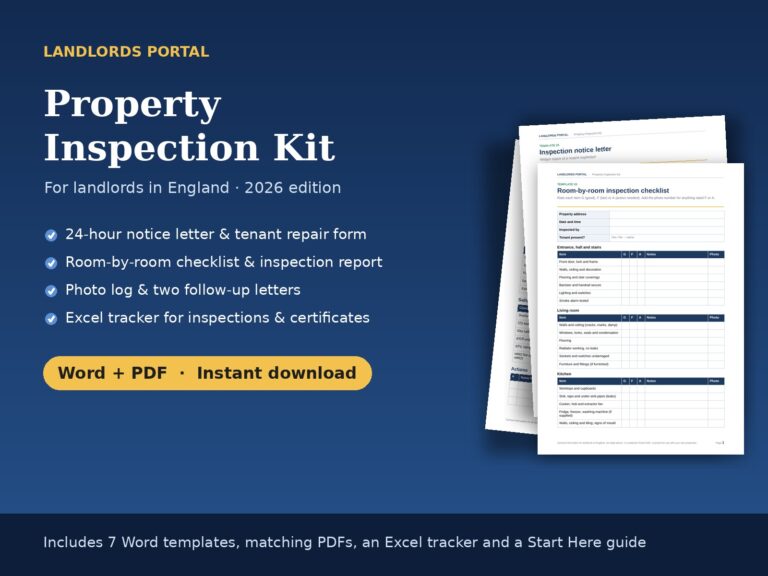
Template pack from Landlords Portal
Run every inspection properly: the Property Inspection Kit
Dated evidence of the property's condition protects you in repair, damp and deposit disputes. This kit gives you every document for an inspection, written for landlords in England.
- 24-hour notice letter and tenant repair report form
- Room-by-room checklist, inspection report and photo log
- Follow-up letters, plus an Excel tracker for gas safety, EICR and EPC dates