
Last updated:
Should you let your property furnished, part-furnished or unfurnished? The answer depends mostly on who your tenants are. Furniture can widen your market and support a slightly higher rent, but it adds cost, safety duties and wear. This guide compares the three options, explains the tax and fire safety rules, and helps you decide which suits your property.
Key takeaways
- Students, sharers, young professionals and corporate tenants usually want furnished. Families usually want unfurnished.
- Part-furnished, with white goods, curtains and flooring, is the most common choice for long-term lets.
- Any upholstered furniture you supply must meet the fire safety regulations and carry the correct labels.
- You can claim replacement of domestic items relief when you replace furniture and appliances, but not for the first purchase.
- Since tenancies became open-ended in May 2026, tenants who bring their own furniture often stay longer.
The three options compared
| Furnished | Part-furnished | Unfurnished | |
|---|---|---|---|
| Typically includes | Beds, sofa, table and chairs, wardrobes, white goods, curtains | White goods, curtains or blinds, flooring, perhaps a wardrobe | Flooring, cooker, often fridge and washing machine |
| Best for | Students, HMOs, sharers, professionals, relocations | Most long-term single lets | Families and long-stay tenants |
| Upfront cost | Highest | Moderate | Lowest |
| Rent | Can be a little higher, depending on the area | In line with the market | In line with the market |
| Typical tenancy length | Shorter | Medium | Longest |
| Ongoing work | Repairs, replacements, fuller inventory | Some | Least |
Any extra rent for furniture varies widely by location. Check what furnished and unfurnished properties of the same size actually let for nearby before you assume a premium.
Pros and cons of letting furnished
✓ Pros
- Appeals to students, sharers and professionals moving for work
- Photographs better and can let faster in city-centre markets
- Essential for HMOs and student lets
- Can support a slightly higher rent
✗ Cons
- Upfront cost, plus repair and replacement
- Fire safety rules for upholstery
- More detailed inventories and more deposit disputes
- Tenants tend to move on sooner
- Storage problems if a new tenant brings their own furniture
Fire and electrical safety for furnished lets
The Furniture and Furnishings (Fire) (Safety) Regulations 1988 apply to upholstered furniture you supply in a let property, including sofas, armchairs, mattresses, headboards, cushions and pillows. Each item must meet the ignition-resistance tests and carry a permanent label. Remove any item without a label. Second-hand furniture must also comply. Carpets, curtains, bed linen and duvets are not covered.
Appliances you supply must be safe. The five-yearly electrical inspection covers the fixed wiring, not portable appliances. PAT testing is not legally required for single lets, but it is a simple way to show your appliances are safe, and HMO licences often require it. See our electrical safety guide.
Tax treatment
- Replacing items: replacement of domestic items relief lets you deduct the cost of replacing furniture, furnishings, appliances and kitchenware, less any amount you get for the old item. It applies to furnished, part-furnished and unfurnished lets.
- First purchase: the cost of furnishing a property for the first time is not deductible from rental income.
- Improvements: replacing an item with a much better one only qualifies up to the cost of a like-for-like replacement.
- No special furnished regime: the old wear-and-tear allowance ended in 2016, and the furnished holiday lettings regime was abolished from April 2025.
See our guide to allowable expenses for landlords for more detail.
Inventory, deposit and insurance
A furnished let needs a detailed inventory listing every item and its condition, with photos. The deposit cap is the same whatever the furnishing: five weeks’ rent, or six if the annual rent is £50,000 or more. Damage beyond fair wear and tear can be deducted, but adjudicators allow for the age of items. You will also need landlord contents cover for your furniture; see our landlord insurance guide.
How to decide
- Who will rent it? Near a university, hospital or city centre, furnished often wins. In family suburbs, unfurnished usually lets better.
- What do comparable listings offer? Match the most successful nearby lets.
- How long do you want tenants to stay? Unfurnished lets usually last longer, which means fewer voids.
- Stay flexible. Many landlords advertise as part-furnished and offer to add or remove items for the right tenant.
For more on keeping your property let, read our guides to reducing void periods and keeping good tenants for longer.
Written by The Landlords Portal Team and updated in November 2026. This is general information, not tax or legal advice.
Frequently asked questions
Can I charge more rent for a furnished property?
Sometimes. In student, professional and city-centre markets furnished lets can command a little more. In family areas the difference is often small or none.
Can I claim tax relief on furniture for a rental property?
You can claim replacement of domestic items relief when you replace furniture or appliances. The cost of furnishing the property for the first time is not deductible from rental income.
Do furniture fire safety rules apply to landlords?
Yes. Upholstered furniture supplied in a let property must meet the Furniture and Furnishings (Fire) (Safety) Regulations 1988 and carry the correct labels.
What does part-furnished usually include?
Usually white goods, flooring, curtains or blinds and sometimes a wardrobe, but not beds or sofas. Set out exactly what is included in the inventory.
Get the landlord updates that actually matter
Rule changes, deadlines and the enforcement cases that catch landlords out — one short email when something changes. Free, and you can leave any time.
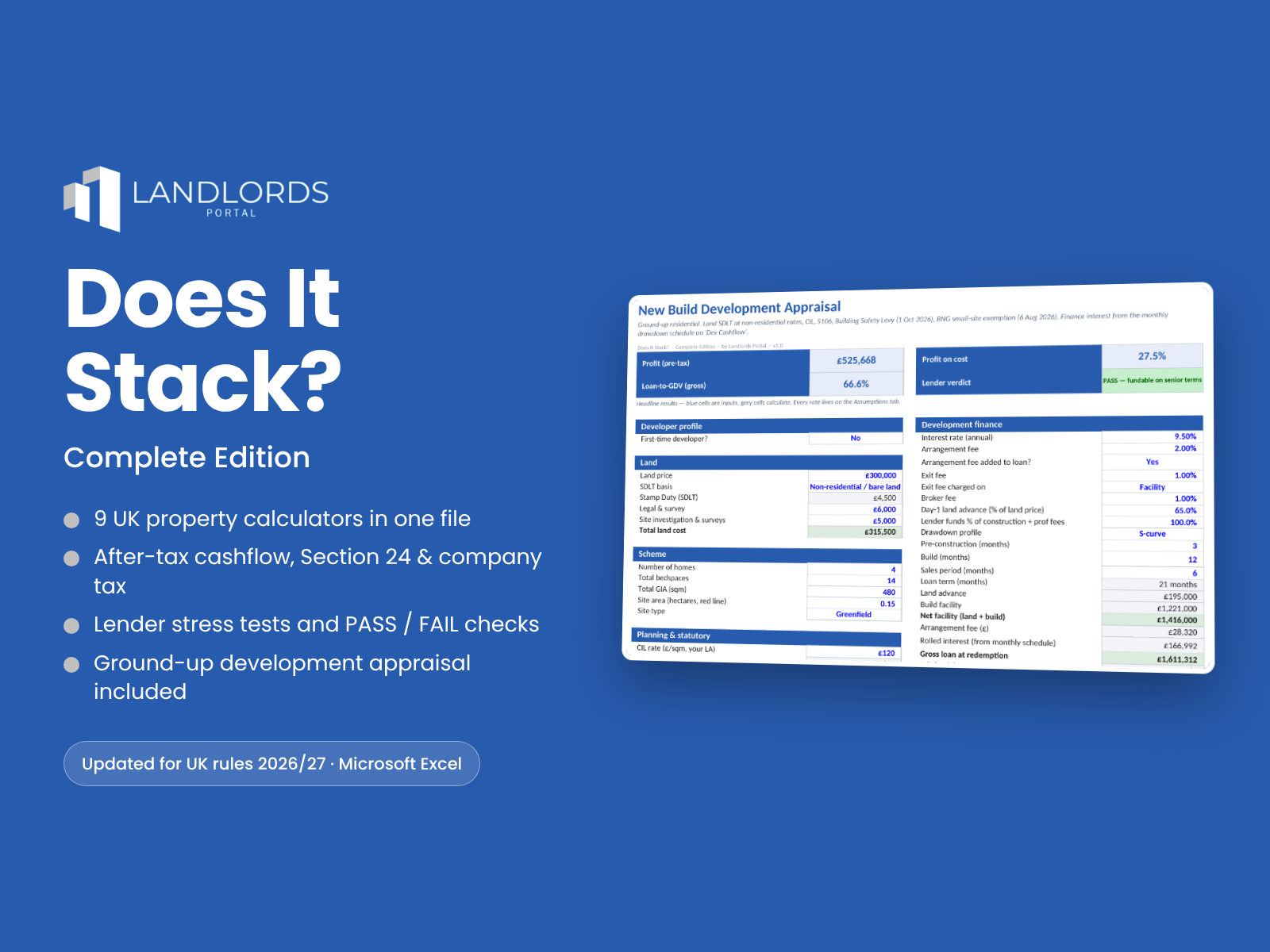
Excel calculator from Landlords Portal
Does the deal stack after tax?
The Does It Stack? calculator shows your cashflow after stamp duty, Section 24 and running costs, and whether a lender will pass the deal.
- Buy-to-let, BRR, HMO, flips, holiday lets and development in one Excel file
- Cashflow after stamp duty, Section 24 and running costs
- Lender stress test before you make an offer