Your tenant has moved out — but the wardrobe is still full, there’s a sofa in the lounge and a box of paperwork in the hall. It’s one of the most awkward moments in lettings: the goods aren’t yours, you can’t simply skip them, and getting it wrong can land you with a claim for conversion (wrongly interfering with someone else’s property). When a tenant leaves belongings behind, your handling of those items is governed mainly by the Torts (Interference with Goods) Act 1977, and the safe route is to follow a clear, documented process rather than act on frustration.
This guide explains exactly what the law expects of you in 2026, the step-by-step process for storing, notifying, selling or disposing of left-behind goods, how the Renters’ Rights Act changes the picture, and the common mistakes that turn a minor nuisance into an expensive dispute.
Key takeaways
- You usually become an involuntary bailee of goods a tenant leaves behind — you must not deliberately or recklessly damage them, and must do what is “right and reasonable”.
- There is no fixed statutory notice period. You must give a reasonable opportunity to collect — and at least three months where the tenant owes you money in respect of the goods (such as storage costs) before any sale.
- Serve a written notice to collect (under the Torts (Interference with Goods) Act 1977) and keep evidence you tried to trace the tenant.
- If goods are sold, you may deduct the reasonable costs of sale and storage — but you cannot raid the proceeds to clear rent arrears or damage. Recover those through the deposit scheme or court instead.
- Keep any surplus for the former tenant. Because they generally have up to six years to claim, holding the balance for that long is the prudent benchmark.
- Prevention beats cure: a clear clause in your tenancy agreement dealing with abandoned goods makes the whole process far simpler.
First, is it actually “abandoned”?
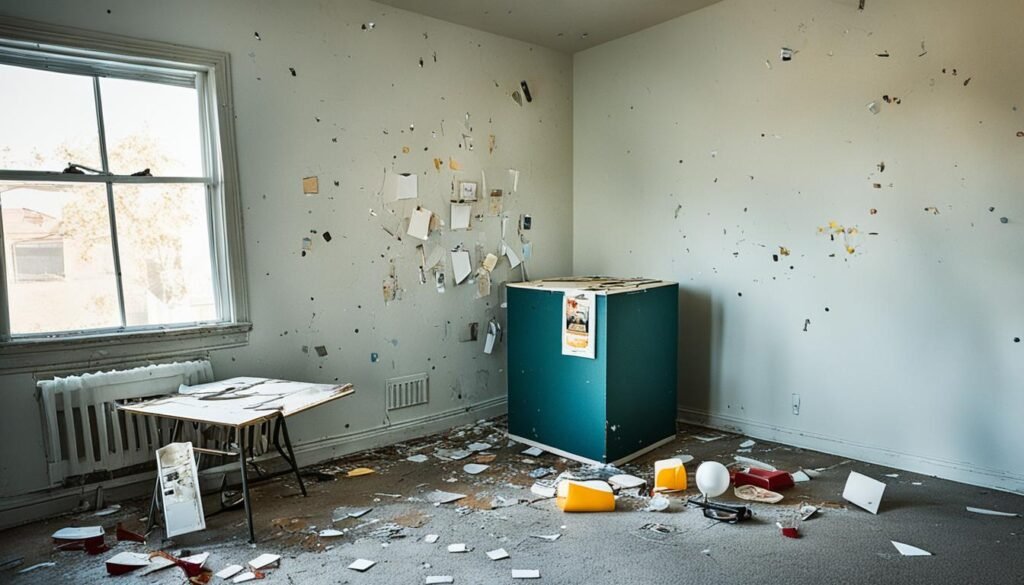
Before you touch a single item, be clear on one thing: belongings left behind are not automatically yours to deal with, and a property that looks empty is not legally abandoned. Acting too early is where landlords get caught out.
The tenancy must have properly ended before you start the abandoned-goods process. That means the fixed term has expired and the tenant has given up possession, or you have obtained a court possession order and the tenancy has been brought to a lawful end. If you assume abandonment, change the locks and clear the property while the tenancy still legally exists, you risk an unlawful eviction claim on top of a conversion claim.
This matters even more in 2026. Under the Renters’ Rights Act 2025, whose main tenancy reforms take effect from 1 May 2026, assured shorthold tenancies are replaced by periodic tenancies and the no-fault Section 21 route is abolished. A tenancy now ends only when the tenant validly serves notice and leaves, or you obtain possession on a Section 8 ground. Until that has happened, treat the goods as the tenant’s and the property as theirs. The old “abandonment” possession procedure in the Housing and Planning Act 2016 was never brought into force, so there is no quick statutory shortcut — you cannot simply declare a property abandoned and take it back.
The law: the Torts (Interference with Goods) Act 1977 and your role as bailee
Once the tenancy has genuinely ended and goods remain, the Torts (Interference with Goods) Act 1977 is the framework you work within. In plain terms, the law treats you as a bailee — someone left in possession of another person’s property — and gives you duties and, in defined circumstances, a power to sell.
Voluntary vs involuntary bailee
There are two ways you can hold a former tenant’s goods:
- Voluntary bailee — you knowingly agreed to keep the goods (for example, the tenant asked you to store a few boxes until they could collect them). You owe a duty to take reasonable care of them.
- Involuntary bailee — goods are simply left with you without your consent, which is the usual situation when a tenant disappears. You did not ask for them, but you still cannot deliberately or recklessly damage or destroy them, and you must take care when returning them to make sure the person collecting is genuinely entitled to them.
The courts expect an involuntary bailee to do what is “right and reasonable” in the circumstances. In Da Rocha-Afodu v Mortgage Express Ltd the Court of Appeal confirmed this practical standard — you are not expected to be a professional warehouse, but you cannot just bin everything either.
A subtle but important point
It is not fully settled whether the 1977 Act’s sale procedure applies to involuntary bailees at all — strictly, the notice-and-sale machinery is clearest where you accepted the goods (for example, to store them). Even so, serving a notice under the Act is the recognised best practice: it helps demonstrate that the goods were abandoned and that you acted reasonably before disposing of them, which is exactly the evidence you want if the tenant later resurfaces.
Step by step: what to do when a tenant leaves belongings behind
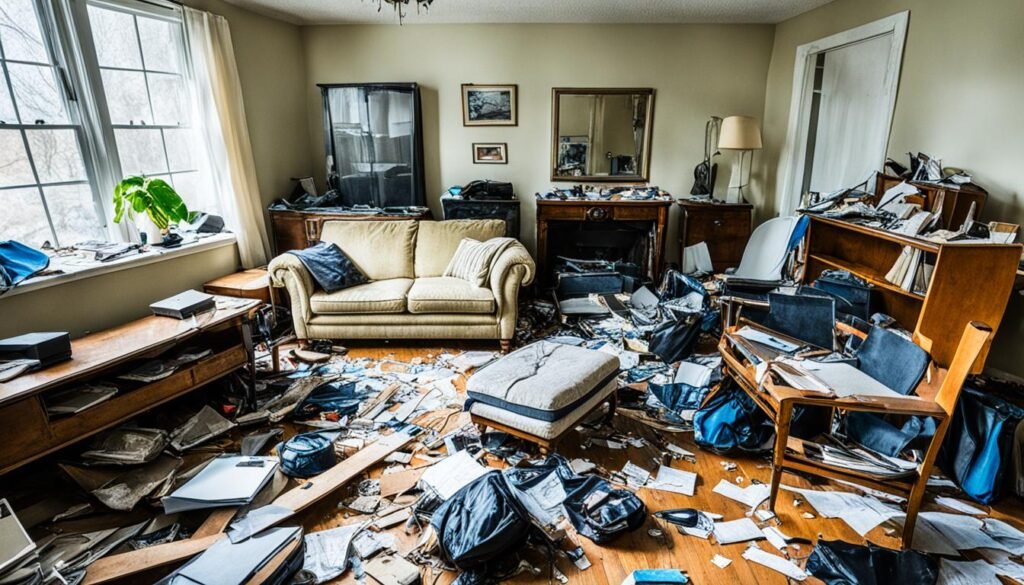
Follow this sequence and document every stage. A clear paper trail is your best defence against a conversion claim.
- Inventory and photograph everything. Make a dated list of what was left, with photos or video. Note the condition. This is also a sensible part of any end-of-tenancy inspection.
- Separate obvious rubbish from goods of value. Genuine waste (open food, broken items) can be cleared, but be cautious — keep your inventory and photos in case there is a dispute about what was thrown away.
- Store the items safely. Keep anything of value secure and undamaged while you trace the tenant (see below).
- Take reasonable steps to trace the tenant. Use the forwarding address, phone, email, guarantor, emergency contact and any next-of-kin details from your referencing file. Keep records of each attempt.
- Serve a written notice to collect. Send it to the last known address and any forwarding address, and leave a copy at the property (see the notice section below).
- Allow a reasonable period to collect. What is reasonable depends on the goods and the circumstances — and is at least three months in some cases (see the table).
- Sell or dispose, then account for any proceeds. Only after the notice period expires, and keeping records throughout.
Storing the goods safely
You can store items at the property, in a garage or shed, or in a hired storage unit. Wherever you keep them, they must be secure and protected from damage — you remain responsible for them until the process is complete. Reasonable storage costs you incur can usually be recovered from any later sale proceeds, so keep the receipts.
Useful kit for storing left-behind belongings
As an Amazon Associate, we earn from qualifying purchases — at no extra cost to you.
Keep clothing, paperwork and small items together, dry and easy to inventory.
Secures a garage, shed or storage unit so you can show the goods were kept safe.
Protect fragile items so you meet your duty not to damage them.
For clearing genuine rubbish once you have inventoried and photographed it.
Serving a notice to collect: what to include
A written notice does two jobs: it gives the tenant a fair chance to collect, and it creates evidence that you acted properly. Send it to the tenant’s last known and forwarding addresses, and leave a copy at the property. A good notice should set out:
- Your name and contact details, and a clear way to arrange collection.
- A description of the goods being held and where they are stored.
- The deadline by which the tenant must collect them.
- A statement that, if the goods are not collected by the deadline, you intend to sell or otherwise dispose of them.
- Any costs the tenant must pay (for example, storage) before collecting.
If you suspect some items belong to a third party (a previous occupier, a hire company, or a friend of the tenant), check ownership and serve notice on them too. When anyone collects goods, get written confirmation that they own them or are authorised to take them — this protects you against a later claim. And if the tenant is bankrupt or in an insolvency process, their possessions vest in the trustee or insolvency practitioner, so any notice should be served on that person.
How long must you give them to collect?
This is where the old rule of thumb of “21 days” often goes wrong. The 1977 Act does not set a single fixed notice period. What it requires is a reasonable opportunity to collect — and the courts will judge “reasonable” against the value and nature of the goods and how hard you tried to contact the tenant. Crucially, where the tenant owes you money in respect of the goods (such as storage or valuation costs that fell due before your notice of intention to sell), the law requires you to allow at least three months.
| Situation | Minimum time to allow before selling |
|---|---|
| General goods, no costs owed in respect of them | A reasonable period (many landlords allow a clear, generous window and document why it was fair) |
| Tenant owes costs relating to the goods (e.g. storage) that became due before your notice | At least three months |
| High-value or sentimental items, or tenant partially in contact | Err on the side of longer — reasonableness is judged with hindsight |
Because “reasonable” is open to challenge, the safest approach is to give a clearly stated, generous period, put it in writing, and keep proof of delivery and of your attempts to trace the tenant. If in doubt, a court can authorise a sale — and getting that authority removes the risk entirely.
Selling or disposing of uncollected belongings
Once your notice period has expired and the goods are still uncollected, you may sell them. Two rules matter most here.
Sell properly and deduct only the right costs. Use the best method of sale reasonably available — don’t dump valuable items for a token sum. From the proceeds you may deduct the reasonable costs of the sale and storage. You then account to the former tenant for the balance.
Do not use the proceeds to clear rent arrears or damage. This is the single most common misconception. Under the 1977 Act you are not strictly entitled to deduct other sums — such as unpaid rent or repair costs — from the sale proceeds. Those are separate debts. Recover them the proper way: through the tenancy deposit scheme, or by pursuing the arrears as a debt. Mixing the two is how landlords end up facing a conversion claim that costs far more than the goods were worth.
Keeping leftover money: the six-year benchmark
Any surplus after deducting your legitimate costs belongs to the former tenant. Try to return it; if you cannot trace them, hold it for them. A former tenant generally has up to six years to bring a claim under the Limitation Act 1980, so retaining the balance (and your full records) for that period is the prudent benchmark. Keep the money identifiable — don’t simply absorb it into your own account.
What about abandoned pets?
Occasionally a tenant leaves behind something far more pressing than furniture: a pet. An animal cannot be left without food, water and care, and leaving one behind may itself be an offence under animal welfare law.
- Cats and dogs: contact the RSPCA, Cats Protection, the Dogs Trust or a local animal charity, who can collect and care for the animal.
- Smaller animals (rabbits, hamsters, fish): a local rescue, vet or someone you trust can usually take them in temporarily while the situation is resolved.
- Record everything: note the date, the animal’s condition and who you handed it to, in case the tenant later asks about it.
Common mistakes to avoid
- Clearing the property too soon. If the tenancy hasn’t legally ended, you risk an unlawful eviction claim as well as a conversion claim.
- Binning everything immediately. Even an involuntary bailee must not recklessly destroy goods. Inventory and store first.
- Relying on a fixed “21 days”. Give a genuinely reasonable period — and at least three months where storage-type costs are owed.
- Pocketing the sale money for arrears. Deduct only sale and storage costs; recover arrears via the deposit or court.
- No paper trail. Without an inventory, photos and proof you tried to trace the tenant, you have no defence if they reappear.
Prevention: put a clause in your tenancy agreement
The cleanest way to handle abandoned goods is to agree the process in advance. A well-drafted tenancy agreement can include a clause stating that any items left after the tenancy ends will be treated as abandoned after a stated period, that the tenant authorises you to store, sell or dispose of them, and how any proceeds will be handled. While a clause can’t override the tenant’s basic rights, it gives you clearer authority and makes the whole situation far less fraught. It also pairs well with a thorough check-out inspection and a clear forwarding address agreed at move-out.
Conclusion
Dealing with belongings a tenant leaves behind is rarely urgent in the way it feels — and rushing is exactly what gets landlords into trouble. Confirm the tenancy has genuinely ended, treat yourself as a bailee with a duty of care, inventory and store the goods, make real efforts to trace the tenant, serve a clear written notice, and give a reasonable period before selling or disposing. Deduct only your sale and storage costs, hold any surplus for the tenant, and keep records at every step. Do that, and you turn a stressful grey area into a straightforward, defensible process — and you can re-let the property with confidence.
Written by the Landlords Portal team. This article is general information for UK residential landlords and reflects the position in England as at 2026; it is not legal advice. For high-value goods, disputed cases or anything you’re unsure about, take advice from a solicitor before selling or disposing of a tenant’s property.
Frequently asked questions
Can I just throw away belongings my tenant left behind?
No. You become a bailee of the goods and must not deliberately or recklessly destroy them. Inventory and photograph everything, store items of value safely, try to trace the tenant and serve a written notice before disposing of anything. Obvious rubbish can be cleared, but keep a record of what you removed.
How long do I have to keep a tenant’s belongings?
There is no single fixed period. You must give a reasonable opportunity to collect, judged on the value of the goods and your efforts to make contact. Where the tenant owes costs relating to the goods (such as storage) that fell due before your notice, you must allow at least three months before selling.
Can I take unpaid rent out of the money from selling the goods?
No. Under the Torts (Interference with Goods) Act 1977 you may deduct the reasonable costs of sale and storage from the proceeds, but not unrelated debts like rent arrears or repairs. Recover those through the deposit scheme or by pursuing the debt separately, and hold any surplus for the former tenant.
What is a notice to collect and who do I send it to?
It’s a written notice telling the tenant what goods you hold, where they are, the deadline to collect, any costs owed, and that you intend to sell or dispose of the items if they’re not collected. Send it to the tenant’s last known and forwarding addresses and leave a copy at the property, keeping proof of delivery.
Does the Renters’ Rights Act change how I handle abandoned goods?
The Torts (Interference with Goods) Act 1977 still governs the goods themselves. But because the Renters’ Rights Act 2025 (main reforms from 1 May 2026) abolishes Section 21 and makes tenancies periodic, you must be sure the tenancy has lawfully ended before treating items as abandoned. There is still no statutory “abandonment” shortcut to recover possession.
What should I do if a tenant leaves a pet behind?
Act quickly — an animal can’t be left without care. For cats and dogs, contact the RSPCA, Cats Protection, the Dogs Trust or a local charity to collect and care for it. Smaller animals can often go to a local rescue or vet temporarily. Record the date, the animal’s condition and who took it.
Can I avoid all this with a clause in the tenancy agreement?
A clause can’t override the tenant’s basic rights, but it helps a lot. Setting out in advance that items left after the tenancy will be treated as abandoned after a stated period, and that the tenant authorises you to store, sell or dispose of them, gives you clearer authority and makes the process much smoother.