
Property owners managing rental accommodation frequently question their obligations regarding documentation retention. Many assume that possessing the most current inspection report satisfies all regulatory demands. However, this approach overlooks important legal protections and practical considerations.
The Gas Safety (Installation and Use) Regulations 1998 establish clear requirements for record-keeping. Regulation 36(3)(c) specifies that landlords must retain safety records for at least two years. This timeframe ensures proper documentation is available for inspection and reference.
Certain circumstances extend these retention periods beyond the basic minimum. When utilising flexibility to conduct checks up to two months early while maintaining the original deadline, records must be kept until two subsequent safety inspections occur. This provision demonstrates the importance of comprehensive documentation systems.
Maintaining thorough records serves multiple purposes beyond mere compliance. Proper documentation provides evidence of consistent maintenance standards and demonstrates due diligence. It also helps resolve disputes and protects both property owners and occupants.
Key Takeaways
- Legal requirements mandate retaining gas safety documentation for specific timeframes
- The standard retention period extends to at least two years under current regulations
- Extended record-keeping becomes necessary when utilising early inspection flexibility
- Comprehensive documentation protects against regulatory penalties and legal disputes
- Proper records demonstrate consistent maintenance standards and due diligence
- Failure to maintain appropriate documentation carries significant financial consequences
- Effective record-keeping systems support both legal compliance and practical management
Understanding Gas Safety Regulations
The legal framework governing rental accommodation establishes precise standards for documentation and verification. Property managers must comprehend these requirements to maintain compliance and ensure occupant safety.
Key Requirements and Record Details
Every valid safety inspection record contains specific mandatory elements. The documentation must describe each appliance’s location and type within the property.
Qualified professionals conducting checks must provide their full name, Gas Safe registration number, and signature. This ensures accountability for the inspection work completed.
Property details including the full address and landlord information form essential components. Any identified defects and subsequent remedial actions must be clearly recorded.
Regulatory References and Legal Obligations
The Gas Safety (Installation and Use) Regulations 1998 provide the fundamental legal framework. Regulation 36(3)(c) specifically addresses record retention periods.
These requirements apply to all gas installations provided by property owners. This includes boilers, cookers, fires, and associated pipework systems.
Understanding these regulatory standards helps managers verify certificate validity. Proper comprehension supports both legal compliance and practical safety management.
Legal Obligations for Landlords
UK legislation establishes clear demarcations of responsibility for maintaining gas appliances in tenanted properties. Property managers must understand these legal duties to ensure compliance and protect occupant welfare.
Responsibilities Under the Gas Safety (Installation and Use) Regulations 1998
The regulations impose a continuous duty on landlords to ensure all gas installations remain safe throughout tenancies. This includes boilers, cookers, fires, and associated pipework systems provided with the property.
Annual inspections by Gas Safe Registered engineers are mandatory for most rental arrangements. The rules cover periodic tenancies, fixed-term agreements under seven years, and licence arrangements.
| Responsibility Area | Landlord Duties | Tenant Duties |
|---|---|---|
| Annual Safety Checks | Arrange and fund all inspections | Provide reasonable access for checks |
| Appliance Maintenance | Ensure all installations remain safe | Report faults promptly, avoid tampering |
| Documentation | Maintain valid certificates and records | Cooperate with safety procedures |
| Legal Compliance | Bear primary responsibility for safety | Follow usage guidelines properly |
Landlord vs Tenant Responsibilities
Tenants have complementary duties under the gas safety regulations. These include not storing combustible materials in meter boxes and allowing access for essential inspections.
The shared responsibility framework means cooperation is essential for maintaining safety standards. Understanding these distinct roles helps prevent disputes and ensures regulatory compliance.
Process of Annual Gas Safety Checks
Scheduling and executing annual gas safety assessments requires careful planning and documentation. The process ensures continuous compliance while maintaining property safety standards throughout tenancy periods.
Property managers benefit from significant scheduling flexibility. Inspections can occur up to two months before the current certificate’s expiry date. This maintains the original compliance cycle while providing practical advantages.
Scheduling Your Inspection
The two-month window enables efficient property management. Multiple inspections can be aligned, tenant schedules accommodated, and last-minute pressures avoided. This flexibility does not reduce the certification period.
Consider this example for clarity. An inspection completed on 4 May 2023 validates until 3 May 2024. The next check between 4 March and 3 May 2024 produces a new certificate expiring 3 May 2025.
| Inspection Scenario | Permitted Timing | Certificate Expiry |
|---|---|---|
| Standard Annual Check | Within 12 months of last check | 12 months from inspection date |
| Early Inspection Utilisation | Up to 2 months before expiry | 12 months from previous expiry date |
| New Appliance Installation | Within 12 months of installation | 12 months from inspection date |
Role of Remedial Actions
Gas Safe registered engineers must complete all required examinations before issuing safety records. Every appliance, flue, and ventilation provision receives thorough assessment according to regulatory standards.
When defects are identified, certificates should still be issued immediately. The document records findings while landlords arrange necessary repairs. Any unsafe appliance must be disconnected immediately until qualified engineers verify safe operation.
The inspection record becomes a living document demonstrating proactive safety management. Landlords supplement it with follow-up action records, creating a comprehensive compliance audit trail.
Managing Gas Safety Certificates and Records
Establishing an efficient system for managing inspection documentation is crucial for property managers. A well-organised approach ensures quick access during inspections and provides a clear compliance history.
Paper and Electronic Storage Options
Regulations permit both physical and digital storage methods for safety records. Each format must meet specific criteria to be legally valid.
Electronic copies offer significant advantages, including easier distribution and backup. For digital records to be acceptable, they must be reproducible as hard copies upon request.
Systems must incorporate robust security measures to prevent loss or interference. Digital certificates must uniquely identify the Gas Safe registered engineer through signatures or licence numbers.
How Long to Keep Records
The baseline requirement mandates retaining each gas safety record for a minimum of two years. This period begins from the inspection date specified in regulation 36(3)(c).
An extended retention period applies when using scheduling flexibility. If checks are conducted up to two months early, the record must be kept until two subsequent inspections are completed.
This ensures property managers can demonstrate consistent compliance with timing provisions. Proper retention protects against regulatory challenges and provides a clear audit trail.
Do I need to keep historic gas certificates once I have the latest one? Landlord
Property managers often wonder about the necessity of retaining previous inspection documents when a current certificate is available. The straightforward answer confirms that maintaining historical records is essential for legal compliance and practical management.
Regulation 36(3)(c) of the Gas Safety (Installation and Use) Regulations 1998 establishes a mandatory two-year retention period. This means property managers should always possess at least the current certificate plus the immediately preceding one.
The requirement extends significantly when utilising inspection scheduling flexibility. If checks are conducted up to two months early while maintaining the original deadline, each record must be kept until two subsequent inspections occur.
| Retention Scenario | Minimum Period | Documents Required |
|---|---|---|
| Standard Compliance | 2 years from inspection date | Current + previous certificate |
| Early Inspection Utilisation | Until 2 further checks completed | 3-4 consecutive certificates |
| Tenancy Management | Duration plus 2 years after | Full tenancy history |
This extended retention demonstrates consistent compliance with timing provisions. It protects against regulatory challenges during HMO licence applications or tenant disputes.
Prudent property managers often retain records throughout tenancies and beyond. This comprehensive approach provides valuable evidence for insurance claims and legal matters, ensuring documentation is always available when needed.
Role of Gas Safe Registered Engineers
Employing properly accredited technicians is fundamental to meeting regulatory requirements for gas safety. These professionals provide the expertise needed to ensure installations remain safe and compliant.

The Importance of Using a Registered Engineer
Since 1 April 2009, Gas Safe Register replaced CORGI as Great Britain’s official gas registration body. Any inspection conducted after this date requires a properly registered engineer to be legally valid.
Using a qualified professional is not merely a regulatory formality. It represents a fundamental safety requirement. These technicians demonstrate proven competence, training, and insurance coverage.
Every registered engineer carries an official ID card. Property managers should examine this documentation before permitting work. The card verifies registration status and specific qualification categories.
| Verification Step | Required Information | Purpose |
|---|---|---|
| ID Card Inspection | Photo, registration number, expiry date | Confirm current registration status |
| Qualification Check | Specific gas work categories | Ensure appropriate expertise |
| Online Verification | Gas Safe Register website search | Independent confirmation |
| Certificate Details | Name, signature, registration number | Document accountability |
Details to Check on the Certificate
The engineer’s name, Gas Safe registration number, and signature must appear on every certificate. This provides clear accountability for the inspection work completed.
Registered professionals have legal authority to disconnect unsafe appliances. They must immediately inform both property managers and occupants when hazards are identified. This prioritises safety above convenience.
Establishing relationships with reputable engineers ensures consistent, documented inspection services. It supports long-term compliance and protects all parties involved.
Electronic Storage and Distribution of Gas Safety Records
Modern property management increasingly embraces digital solutions for compliance documentation. Electronic systems offer efficient methods for storing and sharing essential safety information with occupants.
Landlords may provide tenants with an electronic copy of the gas safety record when certain conditions are met. The occupant must consent to digital receipt and possess practical access to the documentation.
Benefits of Digital Copies
Electronic distribution delivers significant advantages for property managers. Instant delivery reduces administrative delays while creating automatic confirmation trails.
Key benefits include reduced postage costs and simplified management across multiple properties. Digital systems also facilitate easier tracking of distribution dates and tenant acknowledgements.
- Tenant consent required for electronic receipt of safety documentation
- Mandatory paper copy provision upon resident request
- 28-day distribution deadline for existing occupants
- Pre-tenancy provision for prospective residents
- Flexible distribution through landlords or registered engineers
Property managers should maintain detailed logs recording distribution methods and confirmation dates. This creates a robust audit trail demonstrating compliance with statutory obligations.
Despite electronic options, the absolute requirement to provide physical copies upon request remains. Digital systems must incorporate contingency provisions for producing paper documentation when needed.
Practical Tips for Maintaining Compliance
Streamlined systems for documentation and tenant communication form the foundation of successful property management. Implementing organised approaches prevents oversight and ensures consistent adherence to regulatory requirements.
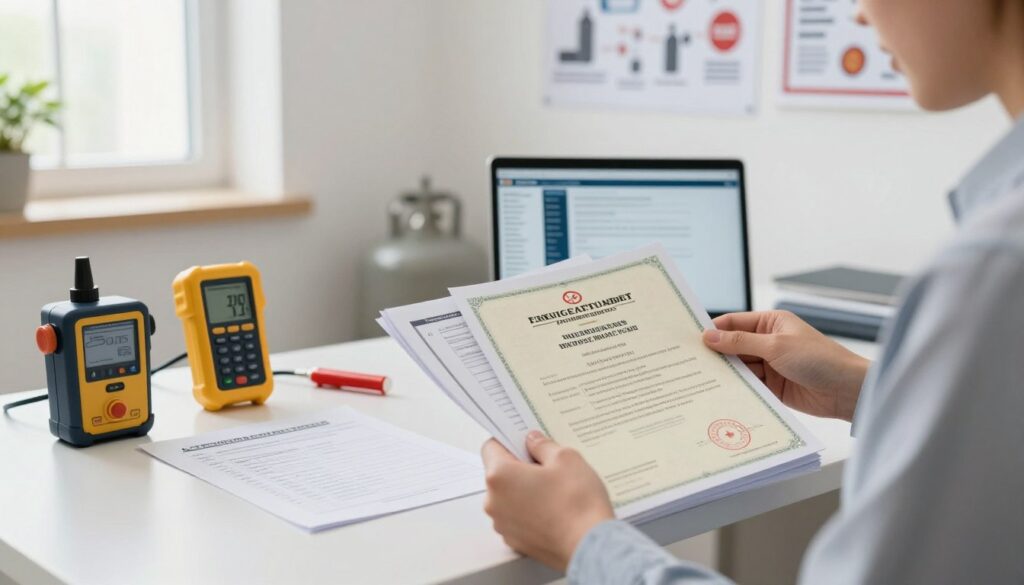
Best Practices for Record Keeping
Property managers should establish automated reminders for annual gas safety checks. Calendar alerts or management software notifications schedule inspections well before certificate expiry dates.
Centralised systems consolidate all safety documentation in one accessible location. This includes certificates, engineer contacts, and distribution records for each property.
Building relationships with reliable Gas Safe registered engineers streamlines the inspection process. Consistent service providers understand specific property requirements and scheduling needs.
Communicating with Tenants
Proactive communication significantly improves access success rates for mandatory safety checks. Providing multiple appointment options with reasonable notice demonstrates professional management.
When residents refuse access, meticulous documentation becomes essential. The Health and Safety Executive recommends at least three documented attempts using different approaches.
| Communication Method | Recommended Frequency | Documentation Required |
|---|---|---|
| Written notice at property | First attempt | Date, contact details provided |
| Formal correspondence | Second attempt | Legal requirements explained |
| Flexible appointment offers | Third attempt | Tenant-selected times offered |
Comprehensive access attempt records provide crucial evidence of reasonable compliance efforts. This documentation may constitute a defence if prosecution is considered.
Consequences of Non-Compliance and Legal Risks
Neglecting gas safety duties exposes property managers to significant legal and financial consequences. The Health and Safety Executive (HSE) and local authorities possess strong enforcement powers to address breaches.
Failure to provide a valid certificate is a criminal offence. Penalties can include unlimited fines or imprisonment for up to six months.
Potential Penalties and Enforcement Actions
Enforcement bodies can serve improvement or prohibition notices. These demand specific remedial works or halt the use of an unsafe appliance.
For assured shorthold tenancies from 1 October 2015, a critical civil consequence exists. Landlords must provide the certificate to serve a valid section 21 notice.
This restriction prevents a simplified eviction process. It can lead to costly and lengthy court proceedings to regain possession.
| Risk Category | Potential Consequence | Enforcing Body |
|---|---|---|
| Criminal Offence | Unlimited fine or 6-month imprisonment | HSE / Local Authority |
| Civil Restriction | Invalid section 21 notice for the tenancy | Court System |
| Insurance | Policy voidance for claims related to non-compliance | Insurance Provider |
Mitigating Risks Through Regular Checks
The most effective risk mitigation is consistent adherence to annual gas safety check requirements. Maintaining thorough records provides a clear audit trail.
Prompt action on any defects identified during a safety check is essential. This demonstrates a proactive approach to safety management for the property installation.
Treating gas safety as a fundamental priority, not an administrative task, protects all parties. It ensures a safe living environment and safeguards the property investment.
Conclusion
Effective gas safety management represents more than mere regulatory compliance—it embodies a fundamental commitment to occupant welfare and property protection.
The retention of inspection records serves as crucial evidence of ongoing diligence. This practice protects against legal challenges while demonstrating professional stewardship throughout each tenancy period.
Comprehensive safety systems transform obligations into strategic advantages. They reduce risks, enhance property values, and ensure healthy living environments for all residents.
Implementing the guidance outlined creates a framework that becomes routine rather than burdensome. This approach positions property managers for long-term success while fulfilling their essential duty of care.
FAQ
How long must landlords retain previous gas safety records?
Landlords are legally required to keep copies of each gas safety record for a minimum of two years. This includes all historic certificates, not just the most recent one. These documents serve as crucial evidence of ongoing compliance with annual safety check obligations.
What specific information must be included on a valid gas safety certificate?
A lawful Landlord Gas Safety Record must contain specific details: the date of the check, the property address, the name and registration number of the Gas Safe registered engineer, a description and location of each appliance or flue checked, and any safety defects identified and actions taken. Confirming all these details are present is essential for compliance.
Can gas safety records be stored and distributed electronically?
A> Yes, electronic storage and distribution of gas safety certificates are fully permissible under the regulations. Landlords can provide a digital copy to new tenants before they move in. Maintaining organised digital records can simplify management and ensure easy access for inspections or tenant enquiries.
What are the penalties for not providing a gas safety certificate to a tenant?
Failure to provide a copy of the current gas safety record to a tenant upon move-in is a serious offence. Local authorities can take enforcement action, which may lead to substantial fines or, in the most severe cases, imprisonment. Compliance is a fundamental legal duty for any property manager.
Who is responsible for arranging the annual gas safety check?
The responsibility for ensuring an annual gas safety check is conducted by a Gas Safe registered engineer falls solely on the landlord. This duty cannot be transferred to the occupants. The landlord must provide a copy of the resulting record to the tenant within 28 days of the check being completed.