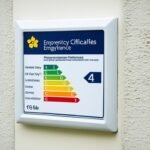
Energy Performance Certificates (EPCs) cause confusion for many landlords — particularly around renewals and what the rules actually require when a tenancy continues or changes. This guide sets out exactly when you need a new EPC, what the current minimum standards are, and what is coming next.
Key Takeaways
- An EPC lasts 10 years. You do not need a new one simply because a tenancy is renewed with the same tenant, provided a valid in-date EPC already exists.
- You do need a valid EPC (rated E or above) when you newly let or re-market the property to a new tenant, or when you sell it.
- Current minimum standard (since 1 April 2020): EPC rating of E or above, unless a valid exemption is registered.
- The government has confirmed the minimum will rise to EPC C for new private rented sector tenancies, but the exact timetable is being finalised — do not rely on any single date without checking the current GOV.UK position.
- Letting a property without a required valid EPC can result in financial penalties and complications when seeking possession.
Do I Need a New EPC to Renew a Tenancy?
The short answer is: no, not solely because of the renewal.
An EPC is valid for 10 years from the date it was issued. If your property already has a valid, in-date EPC rated E or above, you are not required to commission a new one simply because an existing tenancy is being renewed or continued with the same tenant. The existing EPC remains valid for its full 10-year life.

When Do I Need a Valid EPC?
You must have a valid EPC — and provide a copy to the tenant — in the following situations:
- New tenancy / new tenant: any time you grant a new tenancy to a new tenant, or re-market the property.
- Sale of the property: you must have a valid EPC before marketing a property for sale.
- Your existing EPC has expired: if the 10-year validity period has passed, you must commission a new assessment before re-letting.
You do not need a new EPC if you are simply continuing an existing tenancy with the same tenant and a valid EPC is already on the register.
Current Minimum Energy Efficiency Standard (MEES)

Since 1 April 2020, landlords in England and Wales have been prohibited from letting — or continuing to let — a residential property with an EPC rating below E, unless a valid exemption has been registered on the PRS Exemptions Register.
Key points on the current MEES rules:
- The requirement applies to all domestic private rented properties, including renewals and continuing tenancies (not just new lets).
- If your property is rated F or G and you cannot improve it above E, you may be able to register an exemption — for example, a high-cost exemption if the cost of improvements would exceed the cost cap, or a third-party consent exemption if planning permission or a freeholder’s consent cannot be obtained.
- Local authorities can impose financial penalties for non-compliance.
- Full guidance is on GOV.UK: Domestic private rented property: minimum energy efficiency standard.
What’s Coming: EPC C and Future Changes
The government has confirmed it will raise the minimum EPC standard for the private rented sector to EPC C. This is part of broader net-zero policy and is intended to be phased in over the coming years, with new tenancies expected to be required to meet EPC C before existing tenancies.
Important caveat: the precise implementation timetable and cost cap details were revised in late 2025 and remain subject to further consultation. Figures cited elsewhere suggesting firm dates of 2028 or 2030 should be treated with caution — always check the current position on GOV.UK and the NRLA before making investment or improvement decisions: NRLA — Minimum Energy Efficiency Standards.
What is confirmed:
- The minimum standard will rise to EPC C for private rented properties.
- A cost cap will apply (up to £10,000 per property) — landlords will not be required to spend beyond the cap.
- A new EPC calculation methodology is being introduced, which may affect ratings.
- Exemptions will continue to apply where improvements are not technically feasible or cost-effective.
Simple Improvements That Can Raise Your EPC Rating
If your property is currently rated D or E and you want to push toward C before the new standard arrives, many improvements are straightforward and relatively low cost. Here are some that assessors commonly credit:
Low-cost kit that can lift your EPC rating
As an Amazon Associate, we earn from qualifying purchases — at no extra cost to you.
Assessors count energy-efficient fittings, so a full switch is a cheap, quick win.
Seal gaps around doors, windows and the letterbox to cut heat loss.
Reflective panels behind radiators on external walls — one of the cheapest gains.
Insulating an exposed cylinder is very cheap and specifically credited on the EPC.
Topping up towards 270mm typically lifts the EPC score significantly.
For more substantial improvements — cavity wall insulation, solid wall insulation, heat pumps — get quotes from qualified installers and check whether any government schemes or grants (such as the Boiler Upgrade Scheme or ECO4) apply to your property.
Frequently Asked Questions
My EPC is still valid but expires soon — do I need a new one before renewing the tenancy?
Not if the existing EPC is still in date at the time of renewal. However, if you plan to re-let to a new tenant in the future, you will need a valid EPC then. It is sensible to commission a new assessment before expiry, particularly as changes to the MEES rules mean an up-to-date assessment is increasingly important.
Do I have to give the tenant a copy of the EPC?
Yes. Landlords must provide a copy of a valid EPC to a tenant free of charge before they occupy the property. This is part of the prescribed information requirements. Failure to provide it can have consequences for your ability to serve valid notices and recover possession.
What if my property is rated F or G?
You cannot lawfully let (or continue to let) a property rated F or G unless you have registered a valid exemption. Take urgent advice and check the exemptions register process on GOV.UK. Penalties for non-compliance can reach up to £5,000 per property (higher in some cases).
Will the new EPC methodology change my rating?
Possibly. The government is introducing a revised EPC calculation methodology for the private rented sector. A property currently rated D might be rated differently under the new system. Once the new methodology is in place and dates confirmed, it would be worth commissioning a fresh assessment if your current EPC is ageing.
Where can I find the EPC for my property?
You can check the Find an Energy Certificate service on GOV.UK using the property’s postcode or address. This shows the current rating, the date of issue, and its expiry date.
Sources: MEES landlord guidance — GOV.UK | NRLA — Minimum Energy Efficiency Standards | Find an Energy Certificate — GOV.UK
This article is general information for UK landlords, not legal advice. Check the current position or take professional advice.