
At its meeting ending 17 June 2026, the Bank of England’s Monetary Policy Committee voted by a majority of 7–2 to hold the Bank Rate at 3.75%. Two members preferred a 0.25 percentage-point rise to 4%. For buy-to-let landlords, a held rate means borrowing costs are steady for now — but there are a few things worth keeping in mind.
What it means for landlords
- Mortgage costs hold steady. With the base rate unchanged, tracker and variable buy-to-let rates should see little immediate movement, though lenders set their own pricing.
- The Mortgage Charter does not cover buy-to-let. The government’s mortgage support measures apply to residential owner-occupier borrowers, not buy-to-let mortgages — so landlords should not rely on them.
- Rates remain higher than the lows of recent years. The split vote shows the path ahead is uncertain, so it is worth stress-testing your numbers against a possible rise.
Planning ahead
If you have a fixed rate ending soon, review your options early. And remember that under the Renters’ Rights Act you can now only raise rent once a year via a Section 13 notice, so factor any rising costs into a single, evidenced annual review rather than ad-hoc increases.
This article is general information for UK landlords, not financial or legal advice. Take professional advice before making borrowing decisions. Source: Bank of England, June 2026 Monetary Policy Summary.
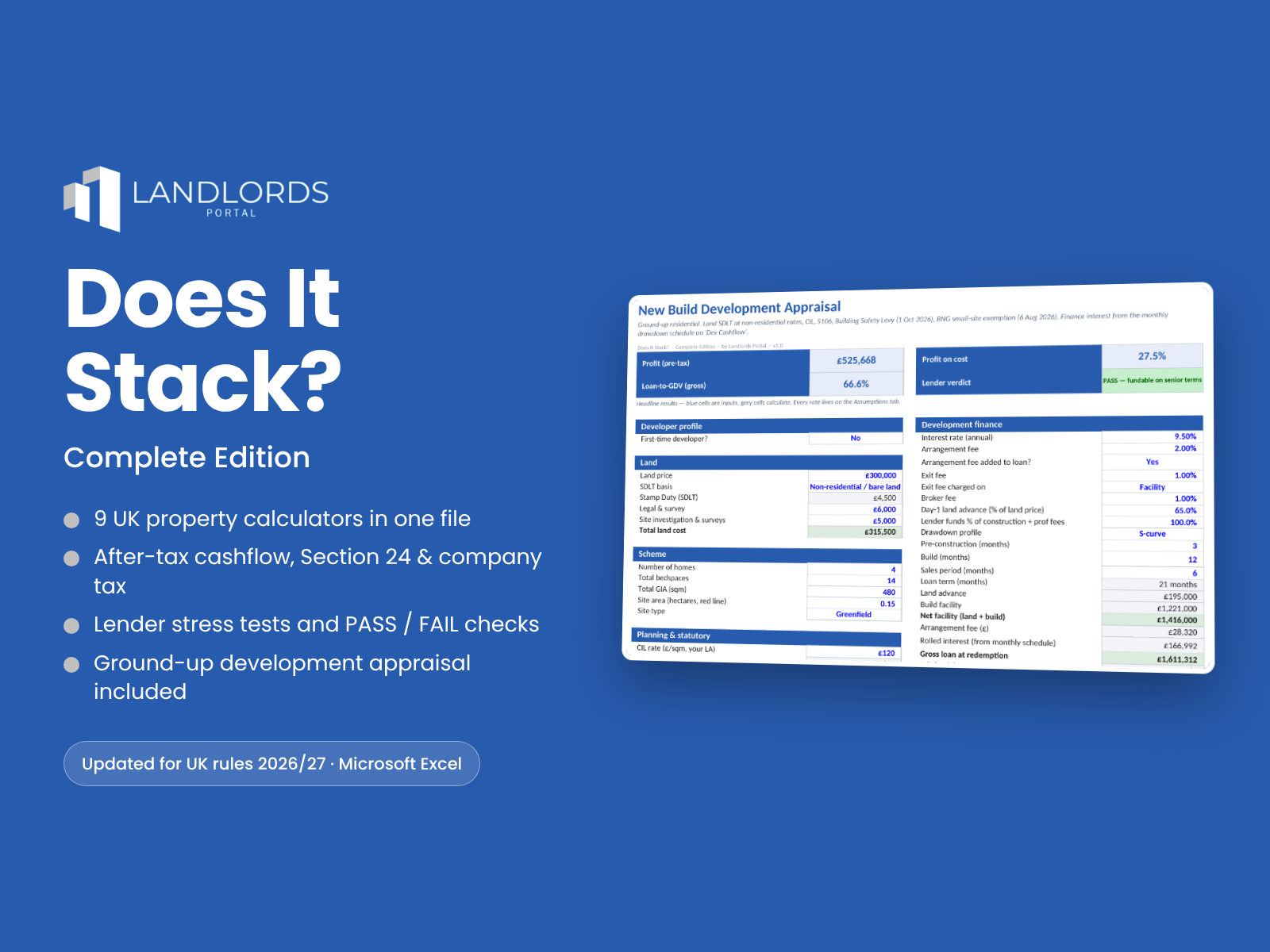
Excel calculator from Landlords Portal
Does the deal stack after tax?
The Does It Stack? calculator shows your cashflow after stamp duty, Section 24 and running costs, and whether a lender will pass the deal.
- Buy-to-let, BRR, HMO, flips, holiday lets and development in one Excel file
- Cashflow after stamp duty, Section 24 and running costs
- Lender stress test before you make an offer
Related posts:
 PRS Database opens 15 December in the West Midlands — what landlords in England need to know
 Flood Performance Certificates: government announces pilots for homes in England
 Gateshead Council fines landlord £3,600 for serving a Section 21 notice after 1 May
 Register your rental property: government confirms every region’s sign-up dates and £65 fee