
A good tenant who stays for years is worth more to most landlords than a slightly higher rent. Every change of tenant means an empty month or two, letting fees, cleaning, redecoration and the risk of someone less reliable moving in. Since 1 May 2026 retention matters even more: every tenancy in England is periodic, and a tenant can leave at any time with two months’ notice.
This guide covers why tenants leave, what a move-out really costs, and practical steps that keep good tenants for longer.
Key takeaways
- Tenants can now end a tenancy with two months’ notice at any point, so there is no fixed term to rely on.
- Most tenants who could have stayed leave because of slow repairs, poor communication, or a rent rise they feel is unfair.
- A single change of tenant typically costs one to two months’ rent once you add the void, fees and preparation.
- Fast repairs, regular contact, fair annual reviews, and saying yes to reasonable requests such as pets keep good tenants.
What it costs when a tenant leaves
Here is an illustrative example for a two-bedroom flat let at £1,200 a month. Your own figures will differ, but the shape is typical.
| Cost of changing tenant (example) | Amount |
|---|---|
| One month empty | £1,200 |
| Agent’s letting fee or advertising | £400 |
| Professional clean | £200 |
| Touch-up decoration and small repairs | £300 |
| Inventory, referencing and admin | £150 |
| Total | £2,250, nearly two months’ rent |
Compare that with a rent review. Raising the rent by £30 a month instead of £60 costs £360 a year. If the bigger rise makes the tenant leave, you lose far more than you gain. Use the Does It Stack? calculator to test how voids affect your own yield.
Why tenants leave
Within your control
- Repairs that take weeks
- Hard-to-reach landlord or agent
- Large or poorly explained rent rises
- Cold, damp or tired property
- “No” to reasonable requests, such as a pet or a picture hook
Mostly outside your control
- Job moves
- Buying a home
- Relationship changes or a growing family
- Schools and caring responsibilities
- Changes in the local area
You cannot stop a tenant buying a house. You can stop them leaving because the boiler took three weeks to fix.
Eight ways to keep good tenants for longer
1. Fix things fast
Speed of repairs is the strongest signal of a good landlord. Acknowledge every report the same day, give a date, and keep the tenant updated if parts are delayed. Have a reliable plumber, electrician and handyman you can call, and set a small budget your agent can spend without asking you.
2. Make yourself easy to reach
Give one contact route for routine issues and one for emergencies, and say how quickly you will reply. A tenant handbook with appliance instructions, bin days, the stopcock location and emergency numbers saves both of you calls.
3. Check in, not just inspect
Use routine visits to ask what is working and what is not. Tenants often mention small irritations, such as a sticking door or a weak shower, that are cheap to fix and build goodwill. Our guide on how often to inspect a rental property covers notice and frequency.
4. Review rent fairly, once a year
Rent can only be increased once a year with a Section 13 notice, and the tenant can ask the tribunal to decide the market rent. Talk to the tenant before you serve it, explain the figure with local comparables, and consider staying slightly below market for a tenant you want to keep.
5. Say yes to reasonable requests
Tenants who can make a place feel like home stay longer. Allow picture hooks, a paint colour from an approved list, or a garden planter. Tenants can now ask to keep a pet, and you cannot unreasonably refuse; see can landlords refuse pets? Pet owners often stay for years because pet-friendly lets are hard to find.
6. Keep the property warm and dry
High bills and mould are major reasons for leaving. Insulation, good heating controls and extractor fans make the home cheaper to run and more comfortable. See our guide to landlord responsibilities for damp and mould.
7. Refresh the property over time
Do not wait for a void to update the property. With agreement, replace a worn carpet or a tired worktop during a long tenancy. It shows you are investing in their home and supports a fair rent at the next review. Our guide to adding value on a budget ranks the best jobs.
8. Ask why when someone leaves
When a tenant gives notice, ask a few short questions: why they are moving, what they liked, and what would have made them stay. Patterns across tenancies tell you what to fix. Our guide to tenant notice periods covers what happens when a tenant wants to leave.
Start with the right tenant
Retention starts before move-in. Check affordability carefully so the rent is sustainable, ask about the applicant’s plans, and be honest about the property’s drawbacks so there are no surprises. See our tenant referencing guide.
Written by The Landlords Portal Team and updated in November 2026. Applies to private tenancies in England. Cost figures are illustrative. This is general information, not legal advice.
Frequently asked questions
How much notice must a tenant give to leave?
Since 1 May 2026, tenants in England must give at least two months’ written notice, unless you agree in writing to a shorter time.
Why do good tenants leave?
Apart from life changes, the most common reasons are slow repairs, poor communication, rent increases they feel are unfair, and a cold or damp home.
Should I keep the rent below market to keep a good tenant?
Often it pays. A change of tenant can cost one to two months’ rent, so a smaller increase for a reliable tenant can leave you better off over a year or two.
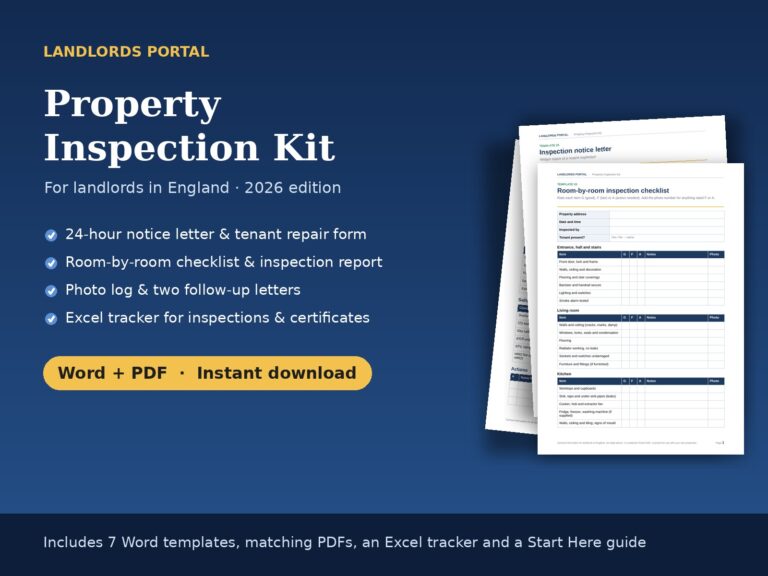
Template pack from Landlords Portal
Run every inspection properly: the Property Inspection Kit
Dated evidence of the property's condition protects you in repair, damp and deposit disputes. This kit gives you every document for an inspection, written for landlords in England.
- 24-hour notice letter and tenant repair report form
- Room-by-room checklist, inspection report and photo log
- Follow-up letters, plus an Excel tracker for gas safety, EICR and EPC dates